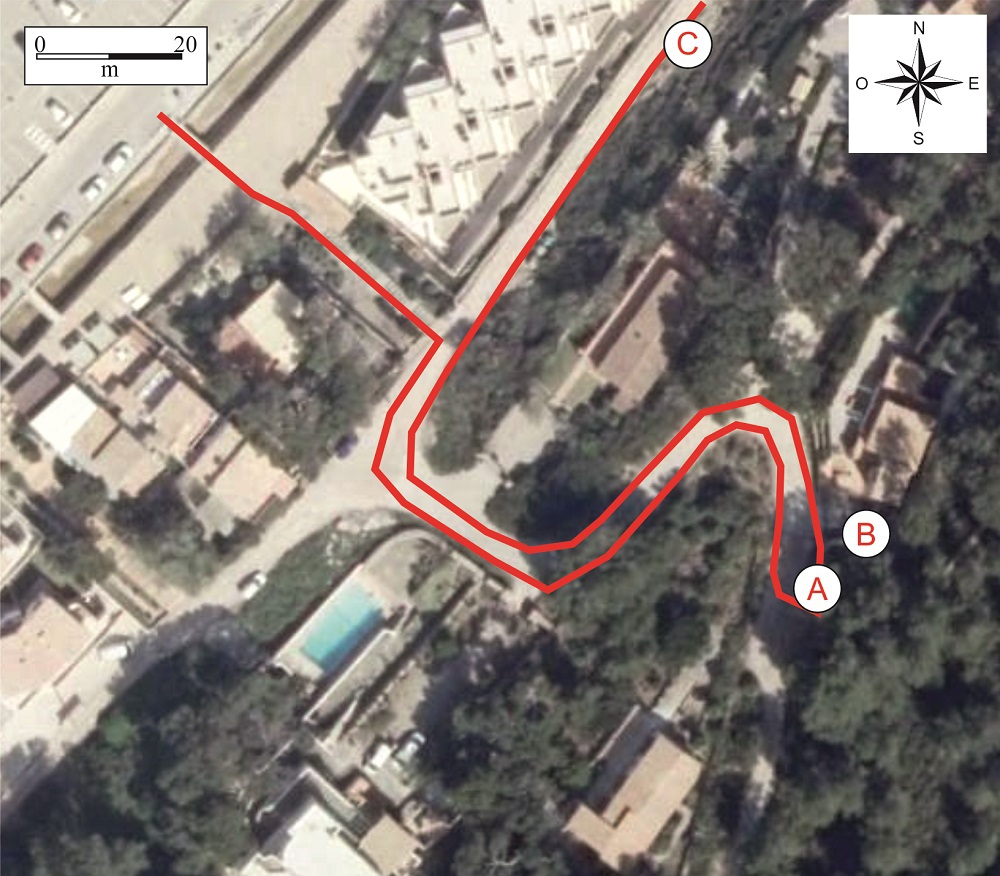
Recommended route.
The itinerary begins on the eastern slope of Cala Molins, where we can see a set of dark-coloured rocks split into small blocks, traversed by veins of a whitish colour (point A).
These are ígneous rocks originating from the cooling and solidification of magma inside fractures or cracks. This type of rocks are called subvolcanic, philonian or hypabyssal.
In this case, their composition is basaltic, and they are called diabases. They frequently contain olivine crystals and vacuoles (small solidified bubbles). Here, in addition, the rocks are traversed by veins of calcite.
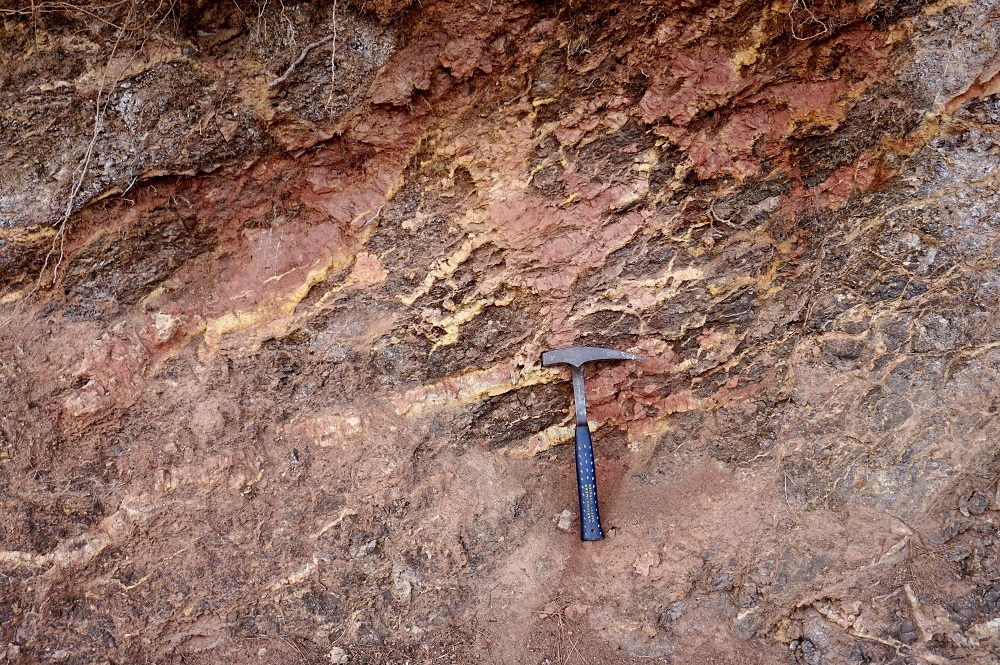
Diabases of Cala Molins.
This type of rock corresponds to the Keuper stratigraphic unit and reflect the specific environmental conditions in which they were formed.</p><p><br></p></div>">Facies of the Upper Triassic. They were formed some 210 Ma ago, when the Balearic Islands had an arid climate and intense volcanic activity.
During the Alpine Orogeny (approximately 25-15 Ma ago), these materials were raised up, deformed and fractured, as is demonstrated by the presence of an inverse fault in the slope behind the nearby apartment (point B).
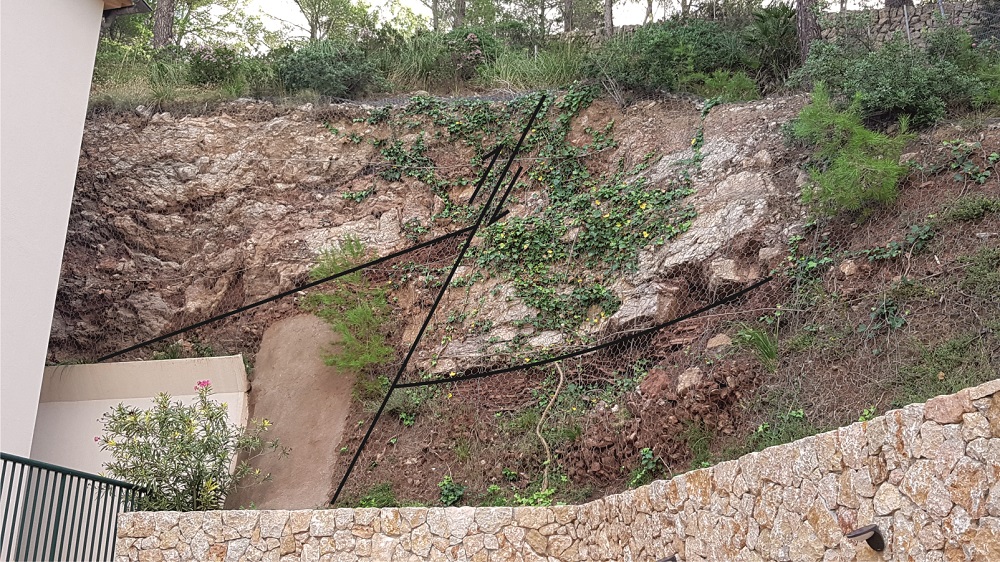
Inverse fault affecting the Keuper materials.
Above them, carbonates began to deposit. Vestiges of that epoch are some pink rocks called carnelians which we can observe in the slope of the street that leads to Cala Molins (point C).
