| UTM-X | UTM-Y | ||
|---|---|---|---|
| STOP 1: THE PERMIAN OF CALA GATA | |||
| STOP 2: THE QUATERNARY OF SON BUNYOLA | |||
| STOP 3: THE MIOCENE OF BEC DE S’ÀGUILA | |||
| STOP 4: THE THRUST FAULT OF ES CAVALL |
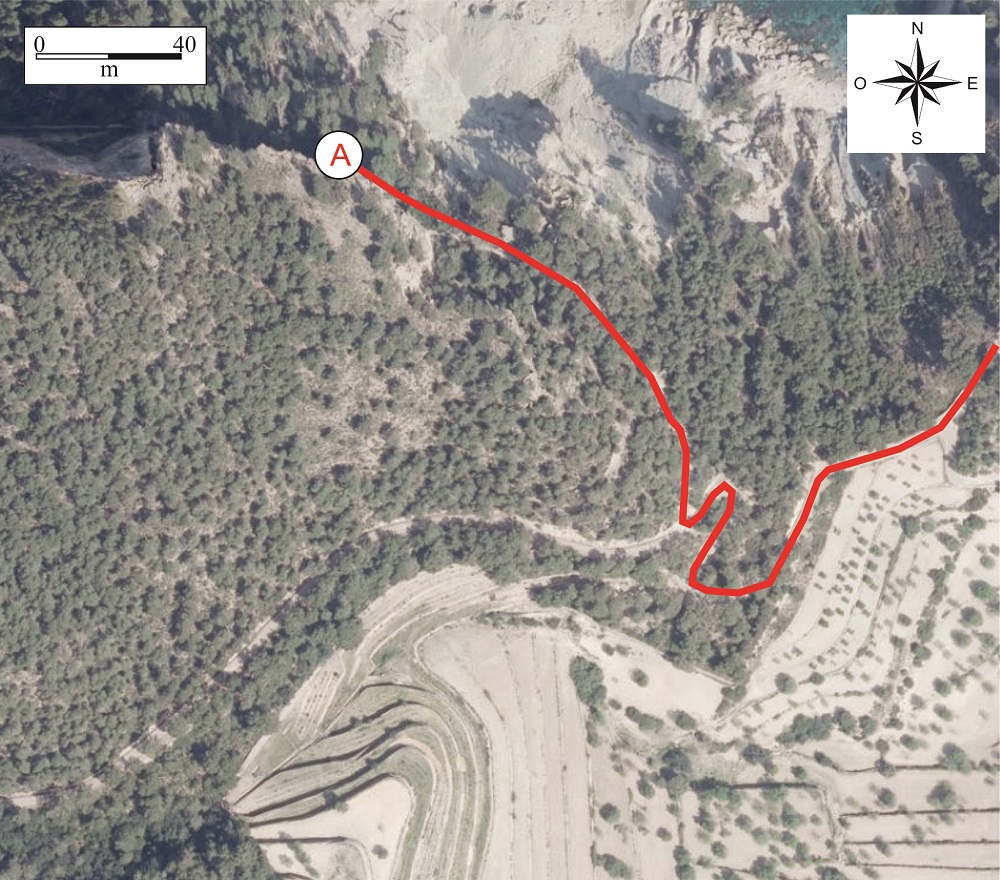
Recommended route.
At the last stop of the itinerary we can observe one of the most characteristic geological structures of the reliefs of Mallorca, especially of the Serra de Tramuntana: the fault
<div class="ql-editor"><p class="ql-align-justify">Inverse fault in which the stratification plane.</p><p><br></p></div>">dip of the fault plane is at a low angle (generally less than 45<sup> o</sup>). It tends to refer to large-scale (regional) structures.</p><p><br></p></div>">thrust fault.Thrust faults are a type of tectonic structure which is caused by the fragile breakage and shortening of the earth’s crust. They occur in stages of compression of the crust. In this case, this process took place during the Alpine Orogeny (25-15 Ma), which was when the island of Mallorca acquired its structure in the form of raised and depressed zones.
In this case, the fault
<div class="ql-editor"><p class="ql-align-justify">Inverse fault in which the stratification plane.</p><p><br></p></div>">dip of the fault plane is at a low angle (generally less than 45<sup> o</sup>). It tends to refer to large-scale (regional) structures.</p><p><br></p></div>">thrust fault was formed by a large mass of hard materials of the Lower Jurassic (201-175 Ma) being superimposed over the Banyalbufar Formation from the Lower Miocene (23-16 Ma).The Jurassic materials, basically dolomitic breccias, appear riddled with an abundance of cavities, because they have undergone an intense process of abrasion and karstification.
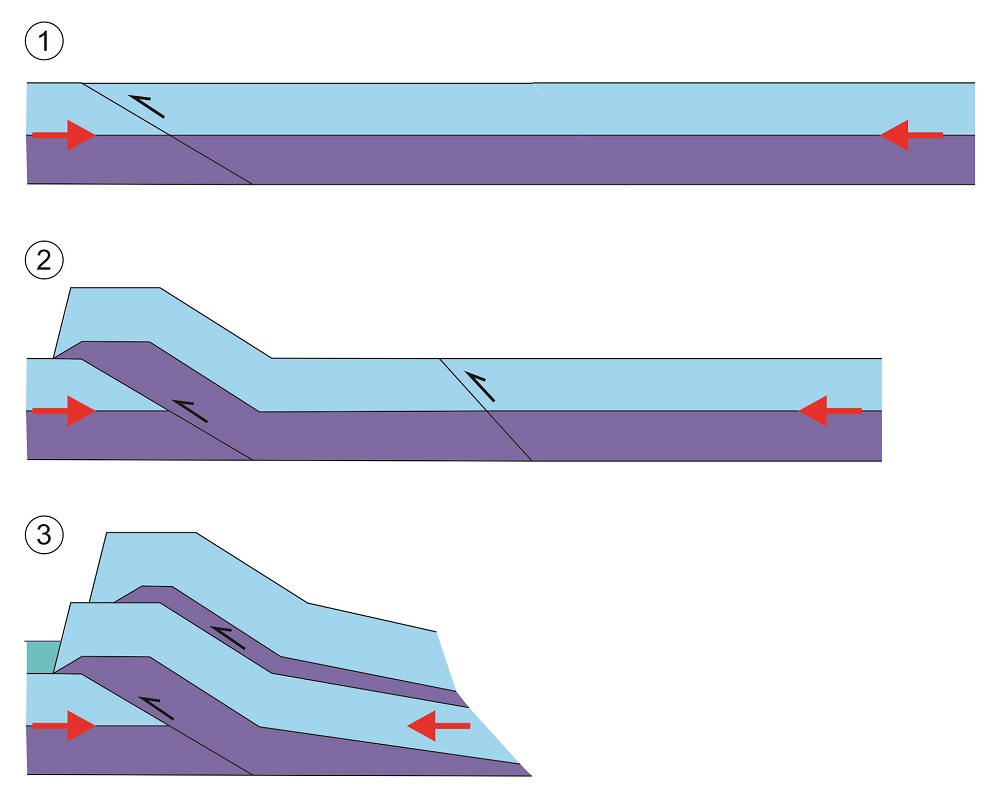
Formation of imbricated thrust faults due to compression forces. Note the shortening of the earth’s crust.
If we inspect the base of the rocky mass, we will detect fine materials of light grey colour formed by small pieces of rock. This is a tectonic sedimentary rock formed by angular pebbles of a size greater than 2 mm and representing at least 50% of the total mass of the rock. The pebbles are united by a cemented material named matrix.</span></p></div>">breccia, originated by the disgregation of the rocks by the intense friction that occurs on the surface of the fault
<div class="ql-editor"><p class="ql-align-justify">Inverse fault in which the stratification plane.</p><p><br></p></div>">dip of the fault plane is at a low angle (generally less than 45<sup> o</sup>). It tends to refer to large-scale (regional) structures.</p><p><br></p></div>">thrust fault. This friction polishes the rock and creates a smooth surface called a fault mirror.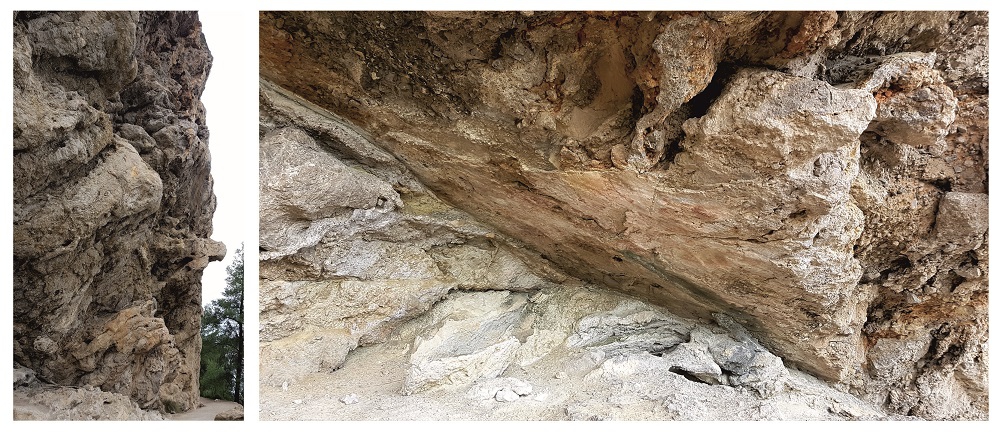
Riddled appearance of the Lower Jurassic materials (left). Breccia and fault mirror at the base of the thrust fault (right).
