| UTM-X | UTM-Y | ||
|---|---|---|---|
| STOP 1: GYROGONITES AND FOSSIL BEACHES | |||
| STOP 3: FOSSIL PLANTS AND ANTCIENT RIVERS. | |||
| STOP 4: THE EROSION OF THE COAST. | |||
| STOP 5: THE ANTICLINE. |
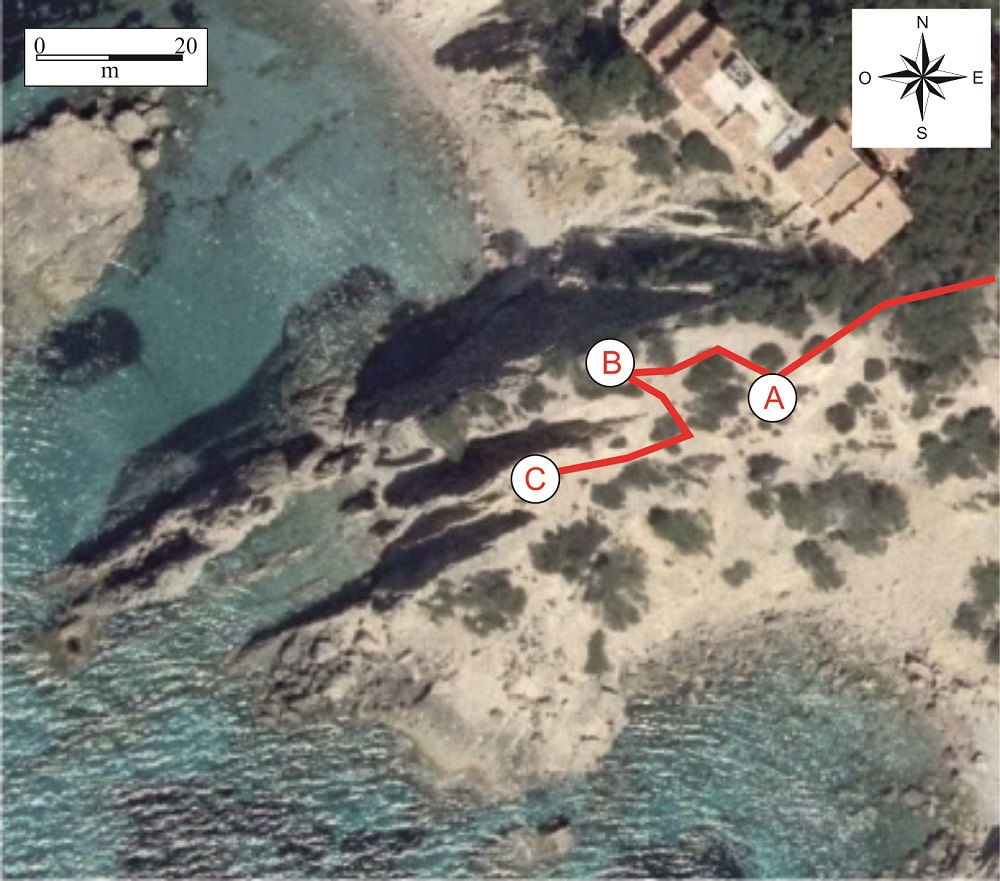
Recommended route.
Access to this stop is via Carrer Jacinto Benavente, skirting the Hapimac apartments by means of a small asphalted public-use path that runs alongside the tennis courts of the apartments. We then take the path indicated with red dots, and on reaching the cliffs we turn right to reach the viewpoint of Ses Tenasses (point A).
From here we can see how towards the south the coast changes morphology, from coves and beaches to cliffs of varying height and verticality.
This is because the local geology forms a large fold in which the oldest materials are situated in its core.</p><p><br></p></div>">anticline in whose central part there predominate hard materials arranged in vertical position correlated with the limestones of the first stop, again in the Peguera Formation.
This last stop corresponds to the zone where the Peguera Formation outcrops most completely, although the abrupt character of the coast in this sector means that visiting it is not advisable.
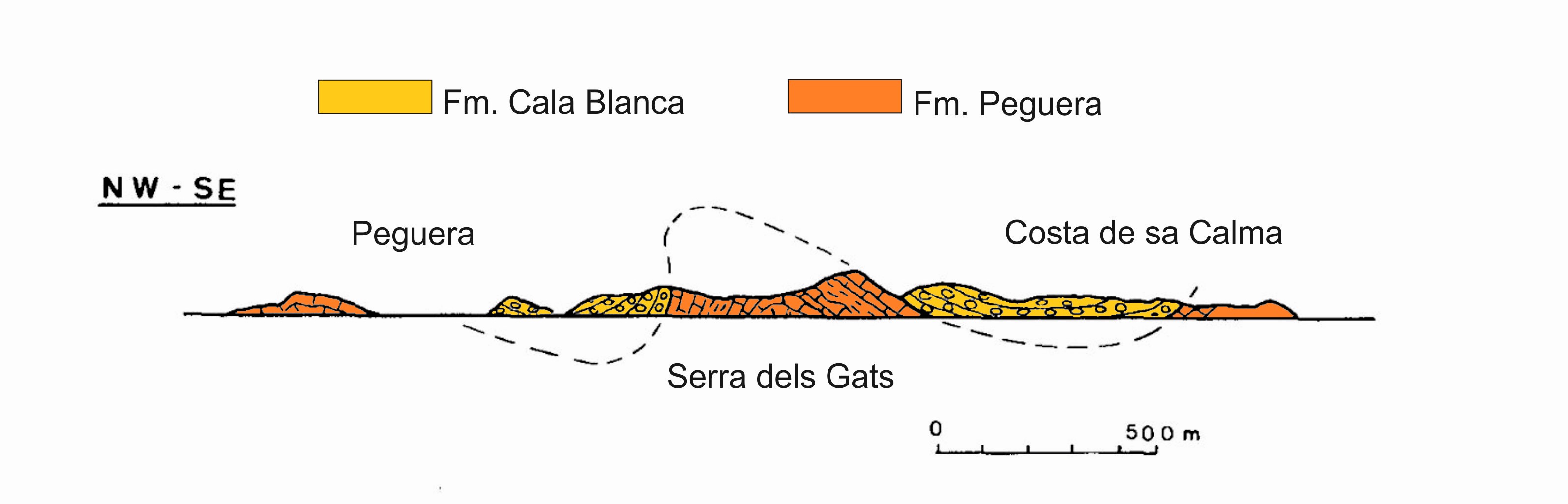
Geological cross-section of the coastal sector from Peguera to Costa de Sa Calma (modified from Álvarez Ramis & Ramos,
If we approach points B and C, in addition to having wonderful views of the section of coast we have walked, we will be able to observe the differential erosion of the vertical strata of conglomerates that have created the cape of Ses Tenasses.
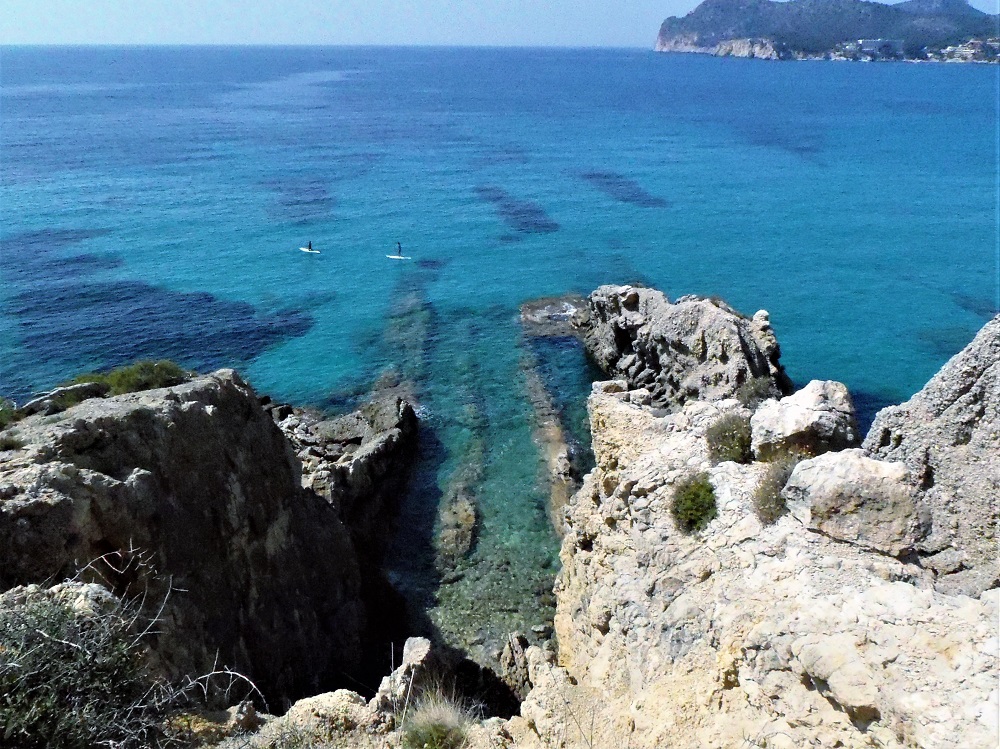
Cliffs of Ses Tenasses with the view of their vertical strata (point C).
