The interest in this site lies in the type of cave, which is unique in Menorca, Mallorca and Ibiza as a whole, although curiously quite abundant in Formentera. This type of cave is called a ‘flank margin cave’, which is used to denote small caves with large openings set into cliffs.
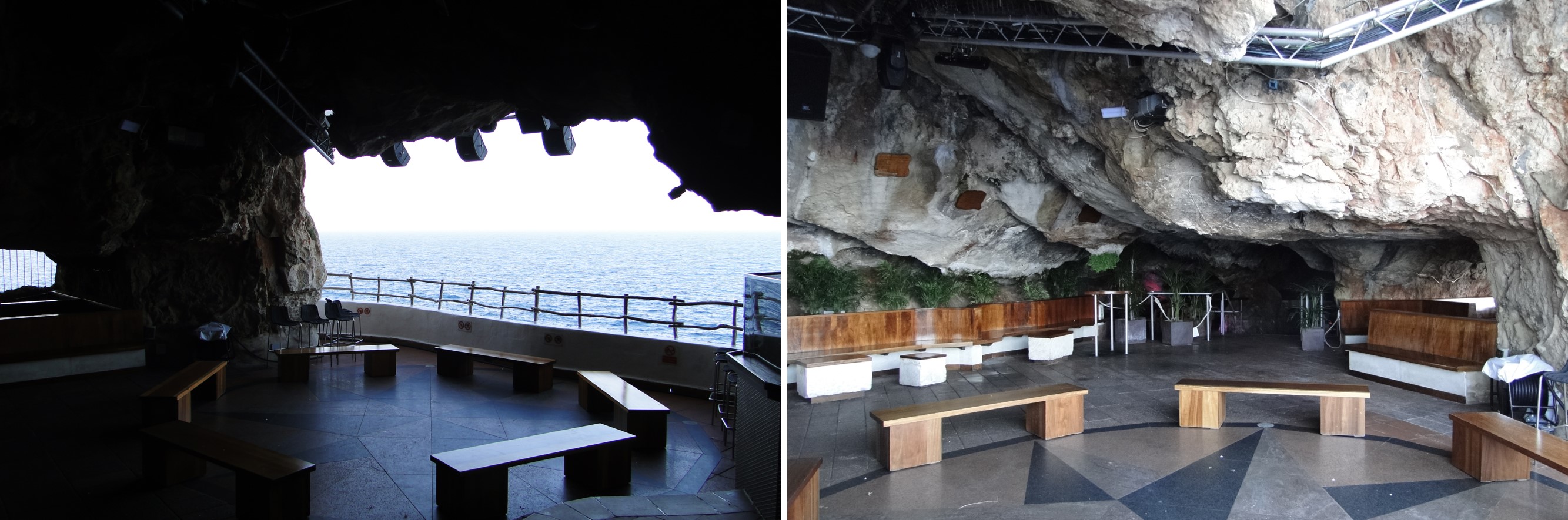
Used as part of a tourist operation, the Cova d’en Xoroi cave displays a wide opening in the cliff leading into the extensive main chamber.
The characteristic traits of these caves include having long layouts parallel to the coastal cliffs, with very little penetration into the interior, in other words, they are not highly developed perpendicular to the coastline. Consequently, Cova d’en Xoroi features a series of rooms laid out parallel to the coastline and opened due to the action of underground water loaded with CO2 that dissolved the rock. This type of cave usually features a main chamber, from which small and plentiful branches emanate that penetrate a short way inwards. They commonly display numerous forms caused by the Sedimentary rock whose main component is calcium carbonate (CaCO3). Its origin can be chemical, organic or detritic.</p><p><br></p></div>">limestone rock dissolving, such as stalactites and stalagmites.
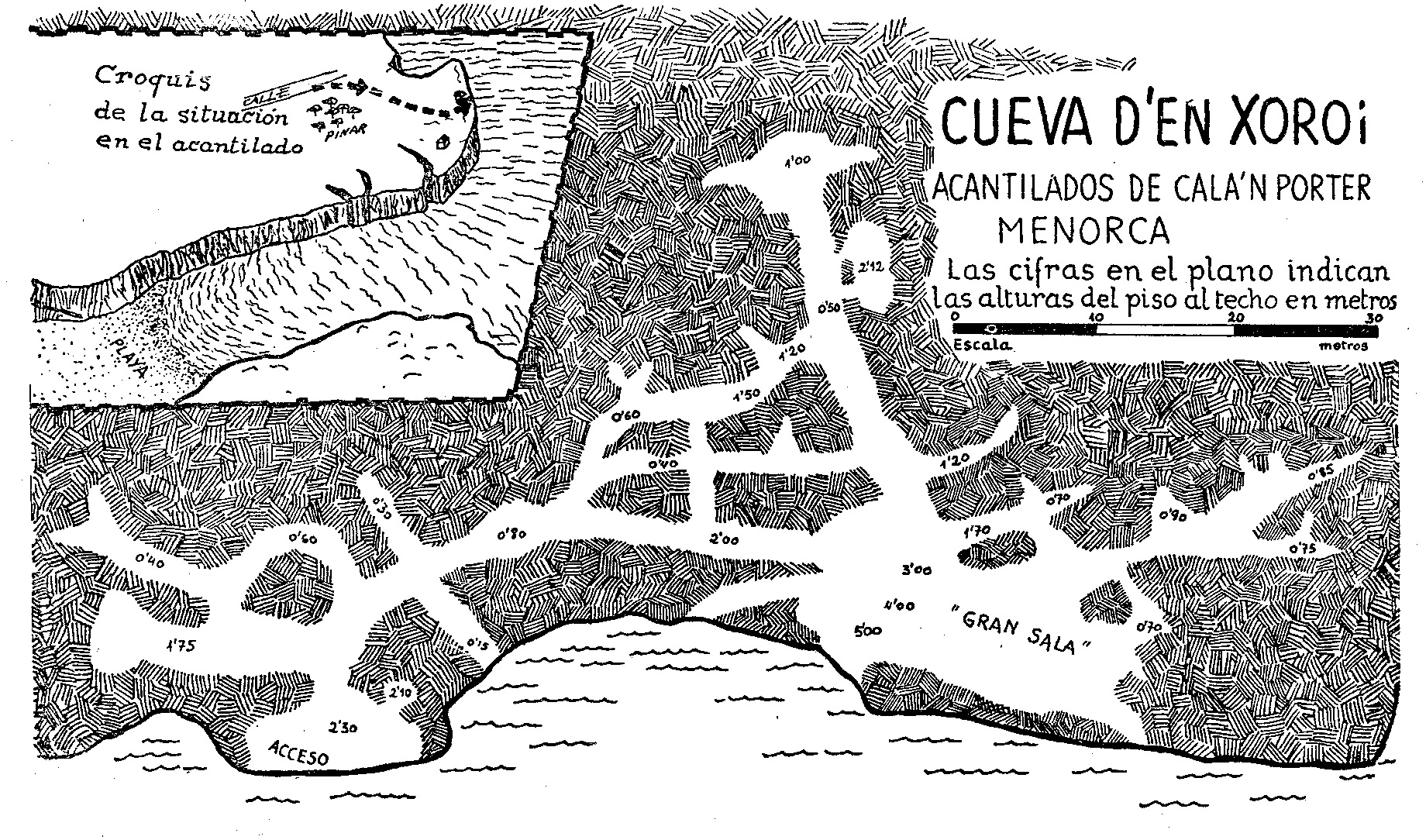
Topographical layout of Cova d’en Xoroi, showing the development of the cave, parallel to the coastline and with branches into the interior of a short length and frequently around a metre in height (Murillo, 1963).
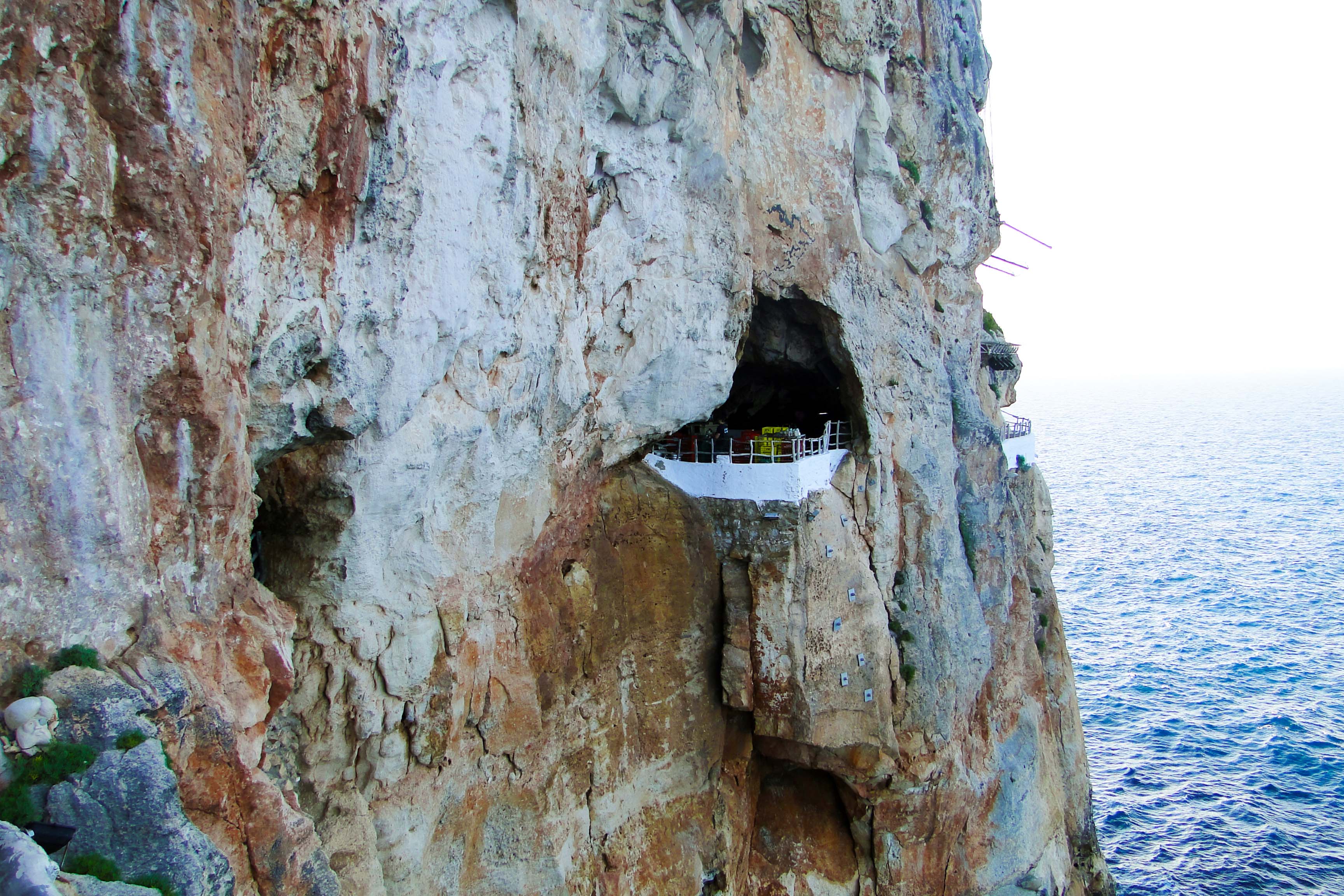
The cave is opened up in the eastern cliffs of the Cala en Porter cove. The main opening stands some 20 metres above sea level.
In 1963 the cave was visited and described by historian A. Murillo, with the aim of promoting knowledge of it while considering the truthfulness of the popular legend surrounding the cave. The entrance to the cave, frequented by dove hunters, is solely through the openings in the cliff as there is no access from land. Of note is the presence of accumulations of red clay (a residual product of the rock dissolving), the presence of numerous stalactites in the internal branches and the spectacular views over the sea and the cliffs that you get from the cave’s main chamber. This also indicates the presence of fossils from the Miocene, such as irregular sea urchins, molluscs and corals.
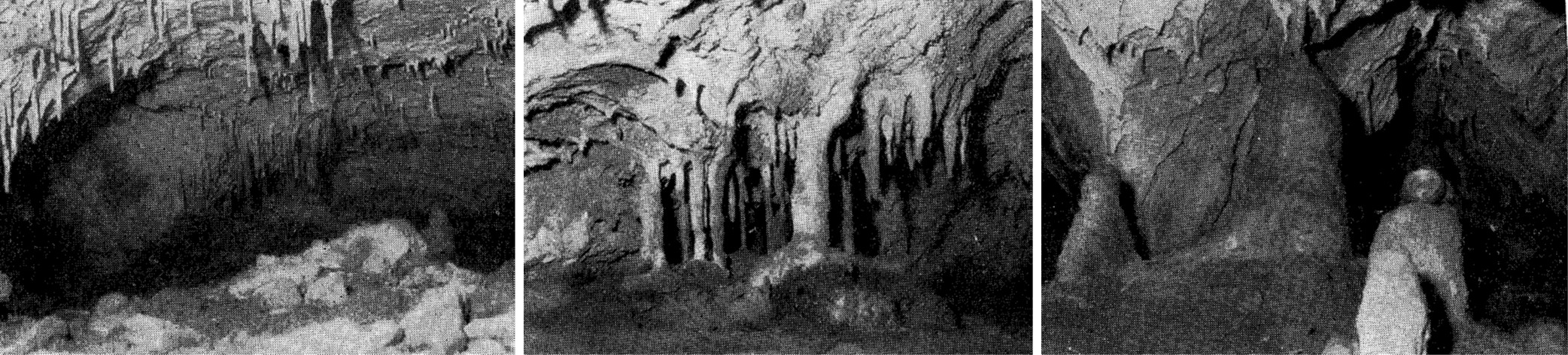
Pictures of the exploration of the cave made in autumn 1963. You can see speleothems such as stalactites, stalagmites and columns at the bifurcation of two galleries in the last photograph, and you can just make out a floor covered in abundant clay (Murillo, 1963).
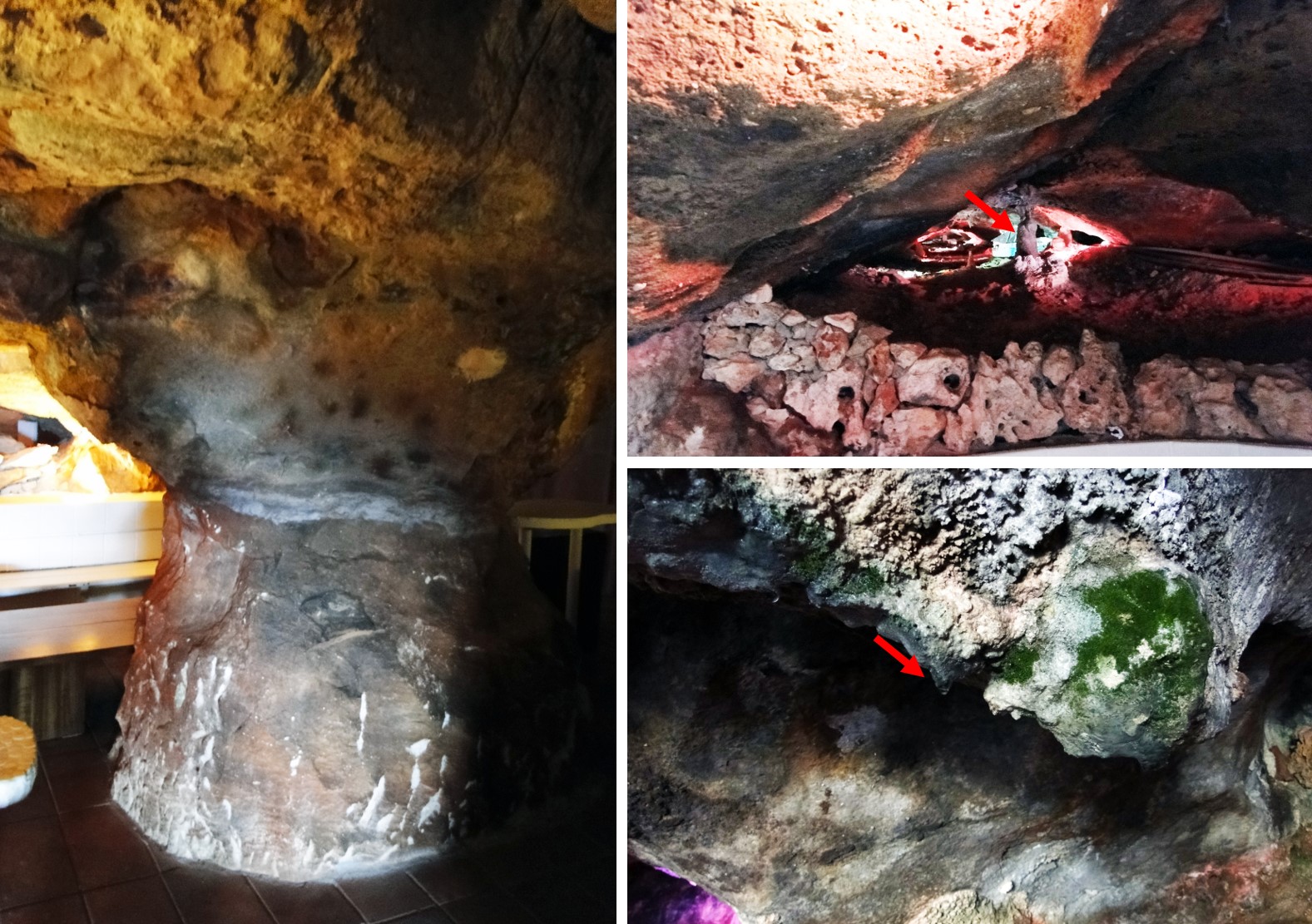
Old bifurcation of two galleries (left), small column surrounded by some stalagmites in one of the smaller branches leading off the main chamber, and current formation of an incipient stalactite with the corresponding constant dripping (bottom right, shown with an arrow).
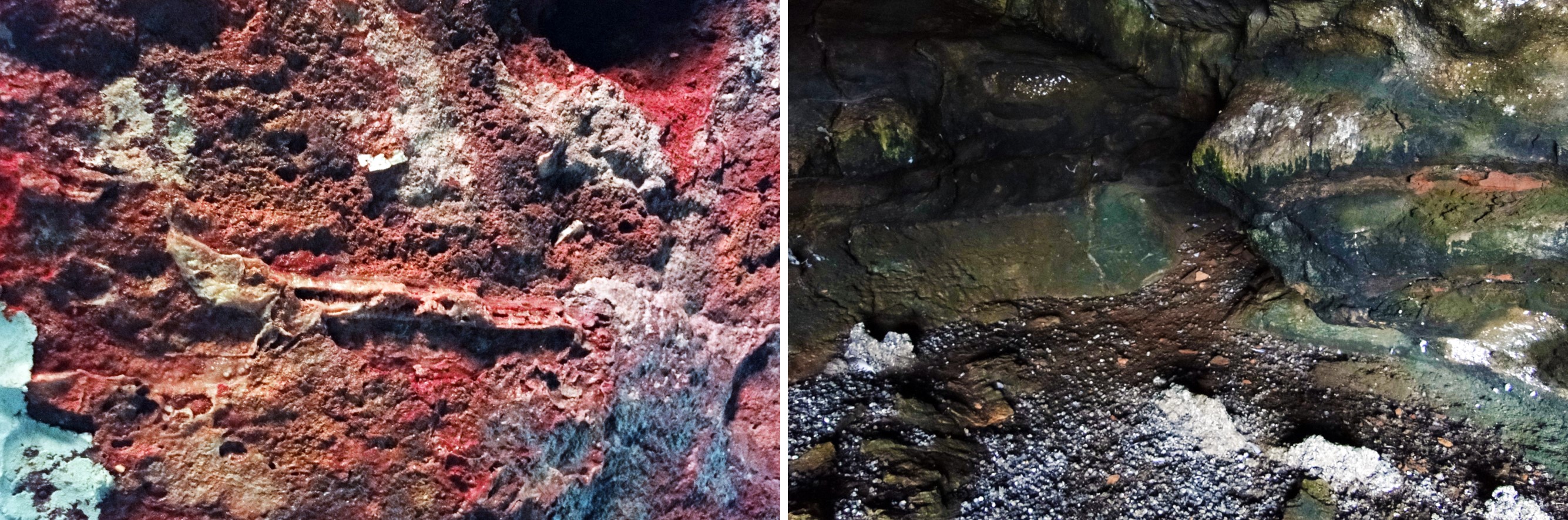
Fossil remains in red clays and silts, possibly of bones of land vertebrates, in one of the branches used by the bar, and abundant accumulation of red clays and silts in a small cavity opened into the cliff near the cave and which is not used by the company.
We should highlight that around 350 caves and chasms have been inventoried in Menorca, most of them located in the island’s Migjorn region, especially in the central and western area, as their presence is scant in the east of the island. In 2008, the Balearic Speleology Federation drafted a technical document entitled Cavitats de les Balears com a Patrimoni Geològic [Cavities in the Balearics as Geological Heritage], showing 126 cavities, 12 of them in Menorca, to which special value is attributed. These cavities are: Cova de sa Duna (which features a fossil dune inside) and Cova d'en Xoroi (Alaior), the Punta Nati blow hole, the C-2 cave at Punta Nati (with an exceptional Myotragus archaeological site), Cova de sa Tauleta and Cova de s'Aigo (in which small lakes have developed) and Cova Murada (Ciutadella), Cova Polida de Fornells (Es Mercadal, the only one on the list in the north of the island), Cova des Coloms (giant in size, reaching a height of 24 metres) and Font de sa Vall or Cova de s'Aigo de Son Boter (Es Migjorn Gran), Cova de ses Abelles and Cova d'en Curt (the latter is hydrologically active, Ferreries). These caves are usually modest in size, less than a kilometre, except for Cova de s’Aigo de Son Boter, which reaches six kilometres horizontally and is the most extensive explored cave in Menorca and the fourth longest in the Balearic Islands.
