The most visited and spectacular geological outcrops in Menorca for the general public are the red Permian and Triassic rocks, affected by the erosion processes that have modelled them into unusual shapes. These rocks can be found in unknown parts of Menorca’s hinterland, in areas that are difficult to access (with no definite path) and usually on private property. This is why so little is known about the outcrops of red Menorca, with some exceptions found in coastal areas with large volumes, such as the Pilar and Pregonda coves and La Penya de s'Indi.
La Penya de s’Indi is a monolith situated on the Turó del Puig Mal hill (at 202 m), where aeolian erosion has modelled strange shapes into massive red sandstones from the lower Triassic (sedimented 251 million years ago). Looking from the Me-1 main road, near Es Mercadal, the monolith has a haughty profile, with an aquiline nose and a huge feather headdress that looks like a great Apache chief. It’s a striking image, which means that it represents the most popular element of Menorca’s geological heritage.
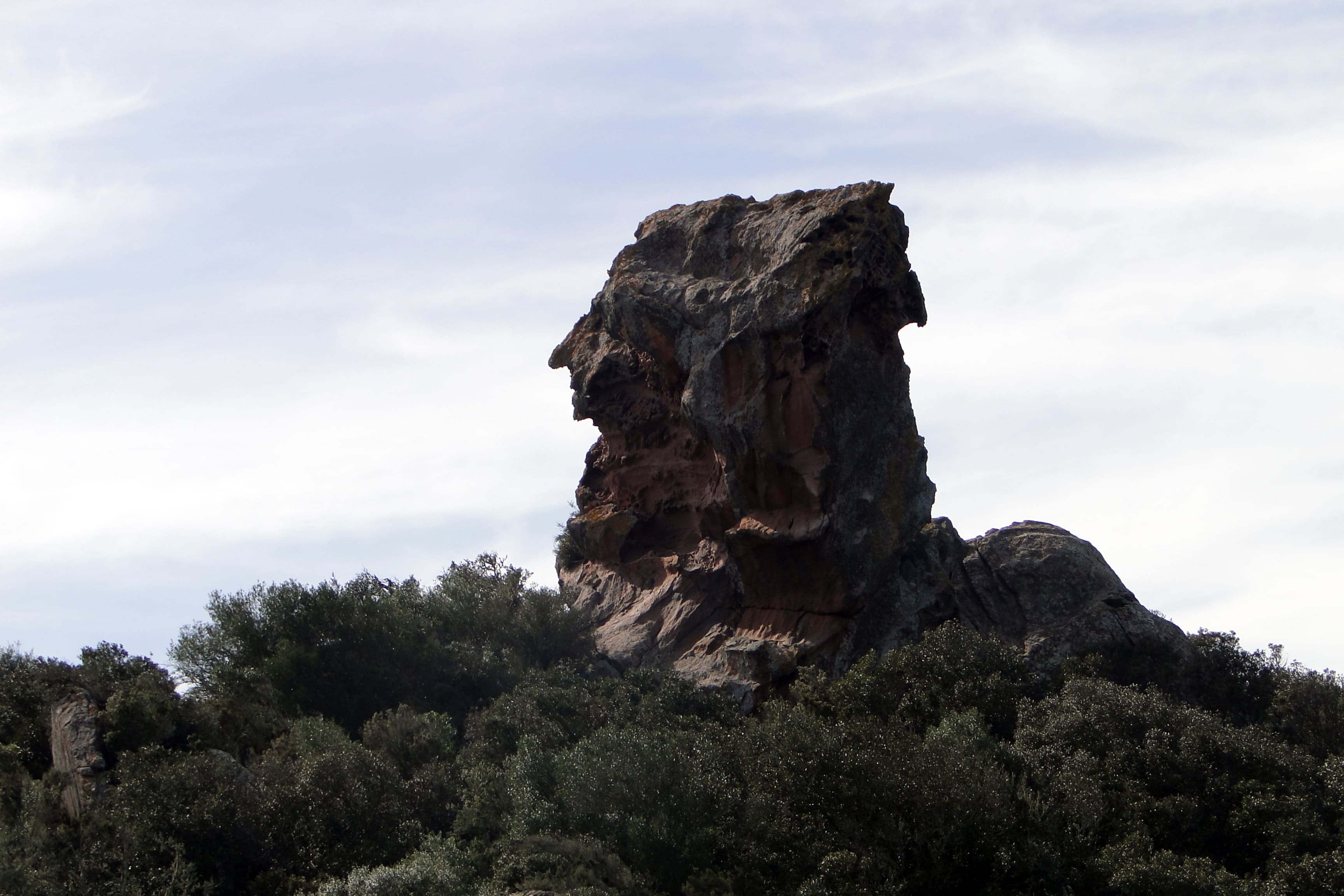
View of La Penya de s’Indi from the Me-1 main road showing its profile with an aquiline nose and a huge feather headdress, symbols of a great Apache chief.
The geological interest in this site is particularly associated with the shapes into which the massive red sandstones have been eroded, very often with well-preserved cross stratifications, which show that these rocks were sedimented by great rivers and where the widely-spaced stratification plains favour limited erosion of isolated monoliths.
In any event, the most spectacular shapes at this and other red Menorca sites are particularly associated with alveolar erosion in honeycomb shapes or tafonis weathering, some of which are surprisingly large and are the result of aeolian erosion of the sandstones.
The most important wind on the island, not only because of its frequency and speed, but also for its environmental, economic and social effects, is the Tramuntana, which blows for about three-quarters of the year with sustained speeds of 90 km an hour and gusts of up to 120 km an hour, resulting in aeolian salinisation due to the large amounts of sea salt carried by the air that fall as the wind blows across the entire island. This is an effect that has a significant impact on the vegetation, causing the movement of some species towards the south and also on the sandstones, favouring the appearance of these beautiful shapes, on rocks that had also been previously weakened by tectonics, organic activity, changes in temperature and different foundation levels.
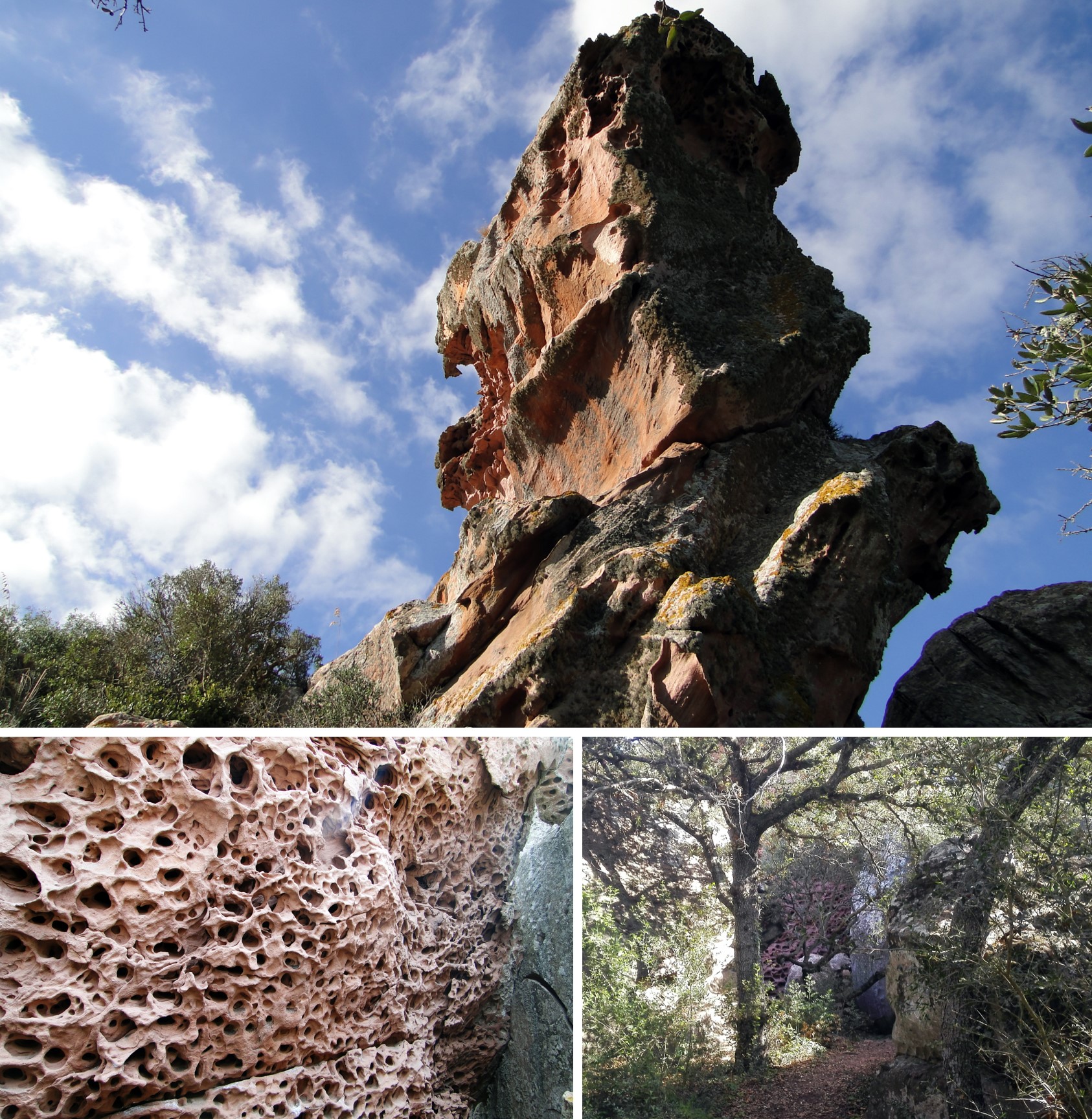
Around the monolith, the sandstones present huge honeycomb or tafonis erosion shapes resulting from chemical meteorisation, caused by the salt-laden wind, on the massive lower Triassic red sandstones, which had already been weakened.
