The Binimel·là Site of Geological Interest represents one of the most interesting and also most complex geological areas of Menorca. It is a geological series comprised of a surprising mix of numerous lithologies of difficult chronological order that are highly deformed, creating spectacular folded structures. This impressive variability of rocks is made up of sandstones, lloselles, conglomerates (associated with mud outflows), phosphate nodules, radiolarites, limestones with fossils of crinoids and rocks of volcanic origin. The area also displays other elements of high geological interest, such as the fossil dunes (eolianites) from the Quaternary with interesting cross stratifications.
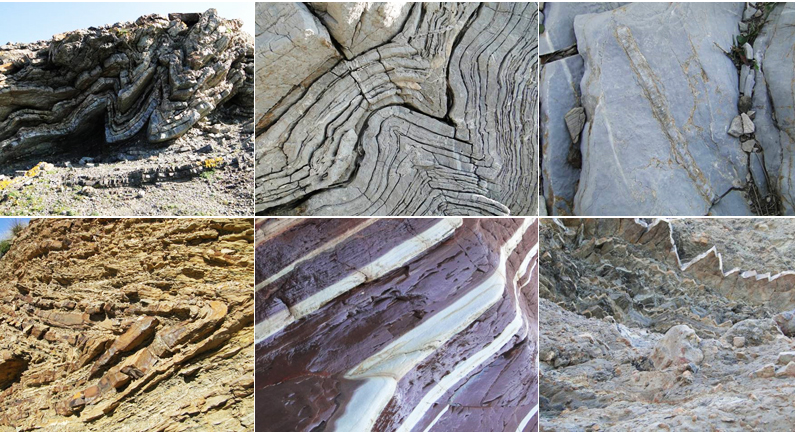
Close-ups of different elements of the geological heritage in Binimel•là; folds in radiolarites, folds in massive limestones, limestones with crinoids, folds in turbidites, undulations in red and white lloselles and cobbles embedded in a conglomerate originated by a mud outflow.
The rocks at Binimel·là (except for the fossil dunes) are attributed to the Devonian and Carboniferous geological periods, from approximately between 410 and 324 million years ago, and were sedimented in the sea. We should highlight that we find in Binimel·là levels of sedimented rocks in very deep seas together with other much shallower levels. One interpretation of this, in principle contradictory, could be associated with a mass fall of the shallow levels from the side of the platform to the abyssal depths, where the levels formed in the surface waters of the sea would be included in the depths.
Although we could mention many spectacular outcrops, we should highlight two. On the one hand, the Escull des Francès, conglomerates layererd in a turbidite series, interpreted as the product of a mud outflow that slipped, in an underwater environment, to become deposited in the abyssal plain. The pebbles float in an abundant sandy-lime matrix where fossils have been identified, especially of corals, but also of sponges, bryozoa, brachiopods, cephalopods, crinoids and trilobites, that have been sedimented on more than one occasion. The other notable tectonic, eustatic or antropical processes</span></p></div>">outcrop is at Calesmorts, where the Palaeozoic rocks of the Binimel·là series are found on more modern red rocks (sedimented in the Permian-Triassic) by the action of a geological structure known as a thrust or reverse fault.
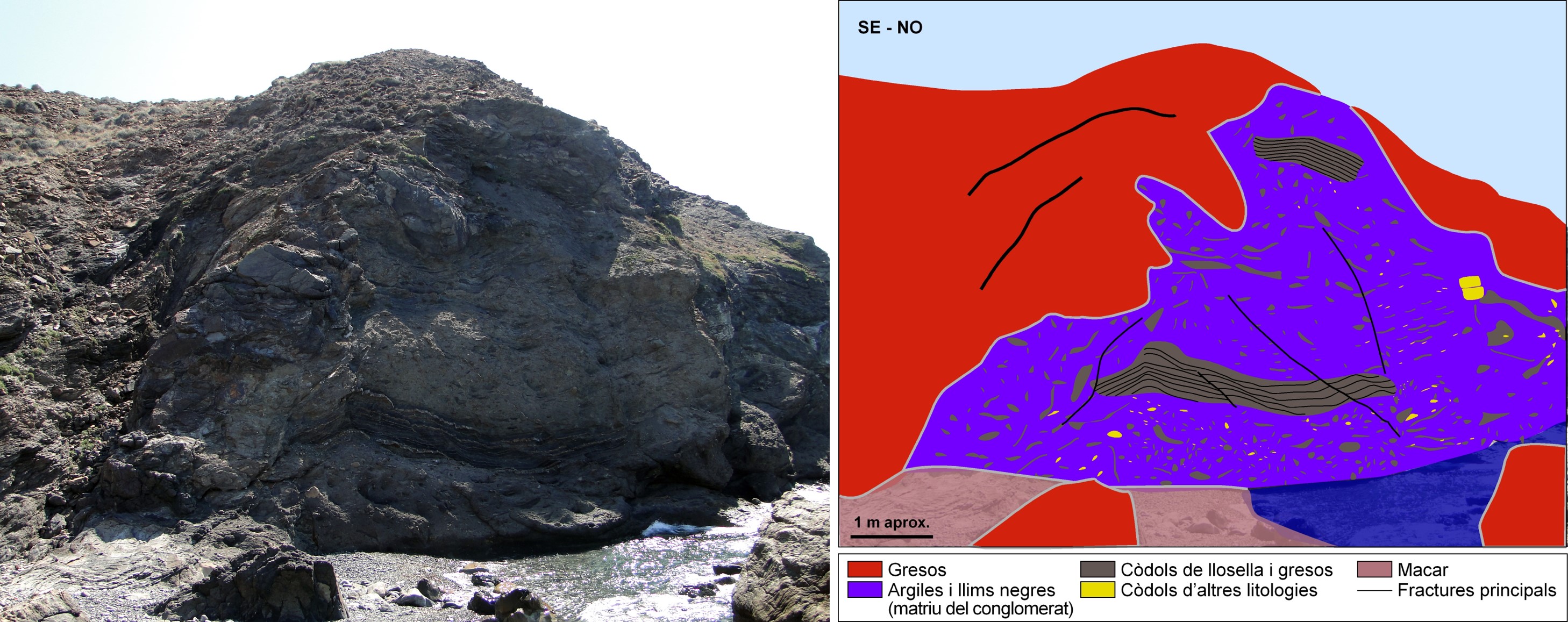
Photograph of the Escull des Francès outcrop and geological interpretation.
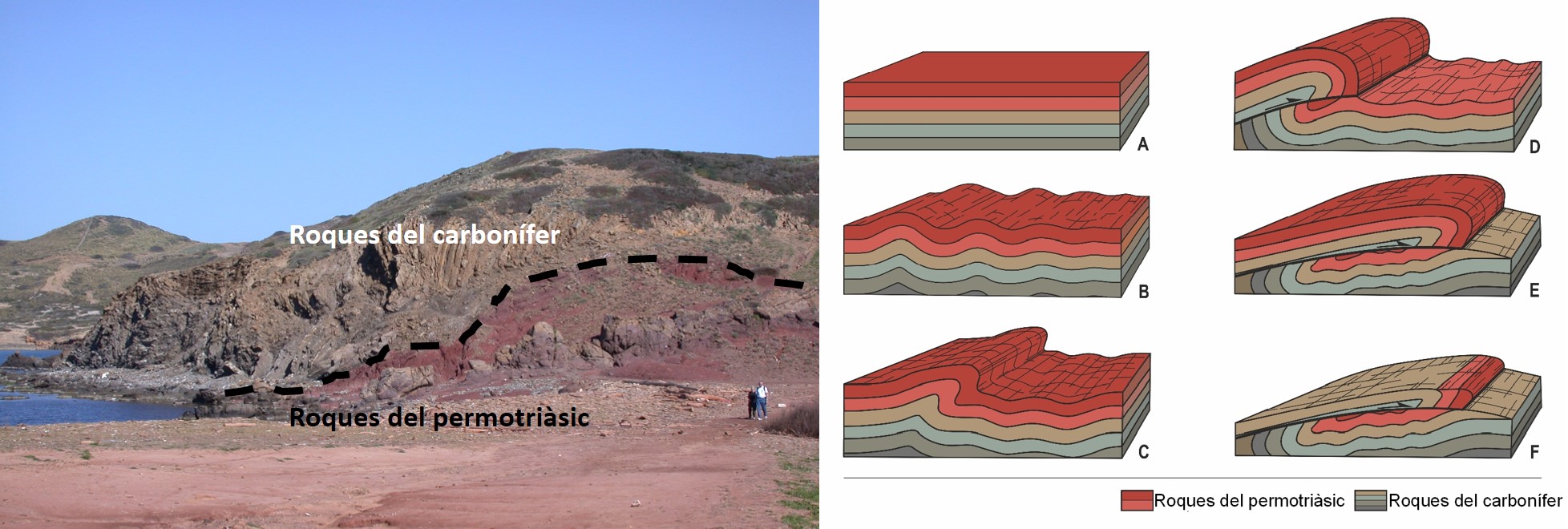
Thrust of the Carboniferous rocks on red sandstones and pelites from the Permian-Triassic at Calesmorts and evolutional diagram of it.
However, many other outcrops could be highlighted, such as the subvolcanic rocks known as quartzkeratophyres, with a slightly yellowish or ochrish colour, which makes the sand caused by its erosion look golden under the water, making Pregonda such a unique beach. Also especially unique on the island are the ones associated with the numerous folded structures in the area.
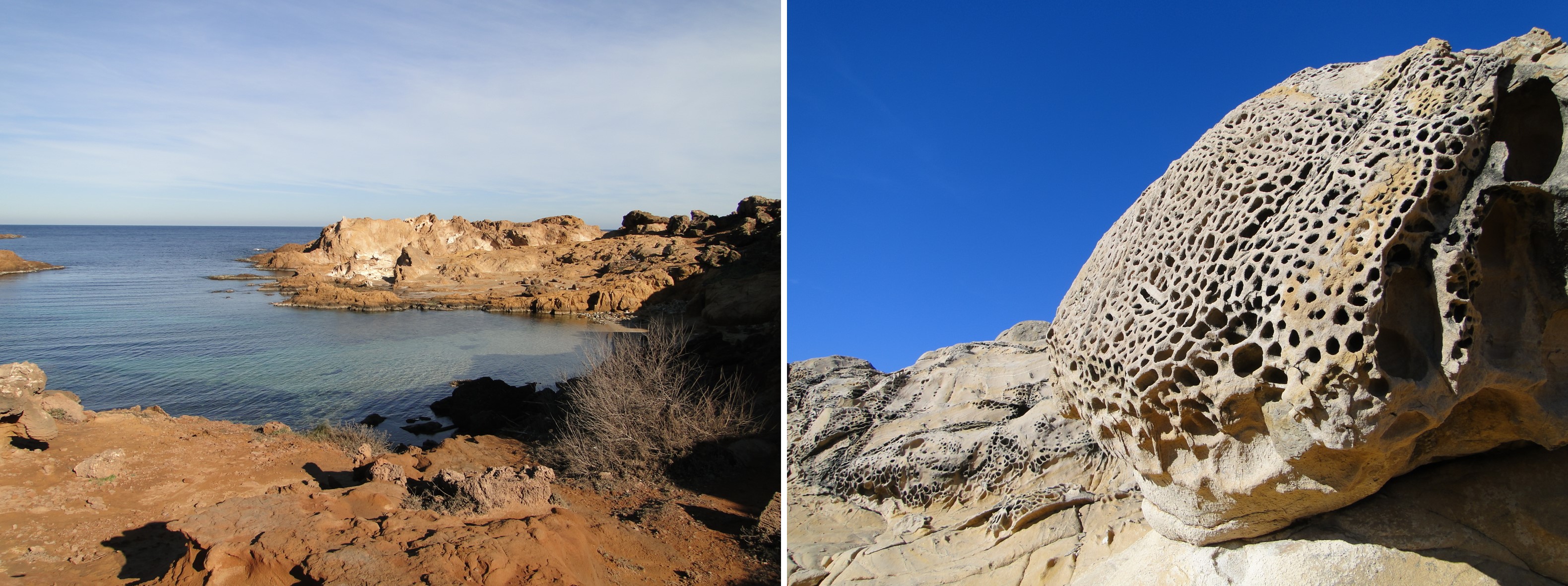
Subvolcanic rocks at Cala Pregonda and close-up of honeycomb erosion to them.
