Near the coast of the Bay of Pollença is this singular upwelling, caused by the fluctuations of salinity undergone during the year. In reality, it corresponds to several neighbouring springs known as Ulls de Rec.
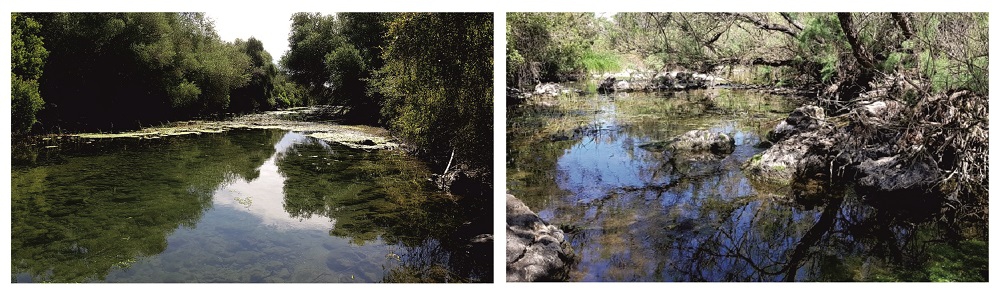
Two general views of the zone of Sa Font de S’Almadrava in spring
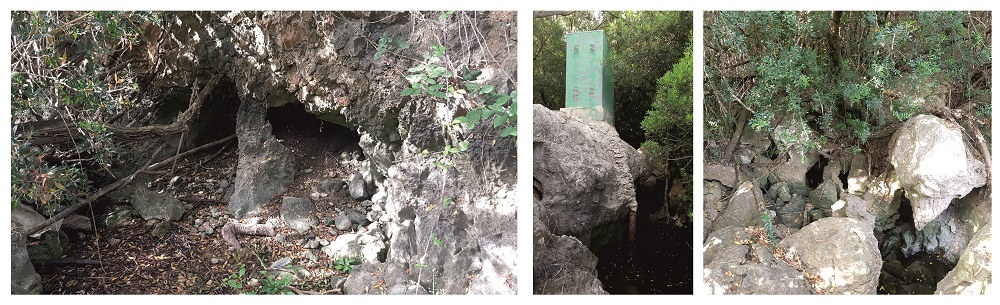
Appearance of Sa Font de S’Almadrava in summer. Notice the karstic ducts through which the water emerges.
Due to its location close to sea level, the freshwater from the aquifers of the Tramuntana range mixes with the seawater that impregnates the permeable materials of the subsoil, which makes saltwater emerge from the spring instead of freshwater. However, the percentage of saltwater varies considerably throughout the year, the concentration of salts being approximately nine times more in the dry season. The contact between the two types of water is called interphase.
In spite of its modest appearance, in reality the Font de S’Almadrava has an annual flow that is enough easily to exceed those of the reservoirs of Cúber and Gorg Blau. Occasionally its flow can reach almost 8,500 litres per second. This is the water that supplies S’Albufereta.
As tends to be habitual in the springs of Mallorca, the natural duct by which the water rises to the surface in a particular zone is a fault, in this case a normal fault that allows the water to pass through impermeable materials which would otherwise impede the upwelling.

The Font de S’Almadrava in dry season (A) and rainy season (B). Note how the interphase between freshwater and saltwater changes with the rainfall, giving different percentages of salts during the year (Mateos Ruiz R.M. et al, 2009).
