| UTM-X | UTM-Y | ||
|---|---|---|---|
| STOP 1: THE KARSTIC CANYON OF THE TORRENT DE PAREIS | |||
| STOP 2: THE VOLCANIC ROCKS OF CALA TUENT | |||
| STOP 3: THE LANDSLIDES OF SA COSTERA | |||
| STOP 4: SPRING OF SA FONT DES VERGER |
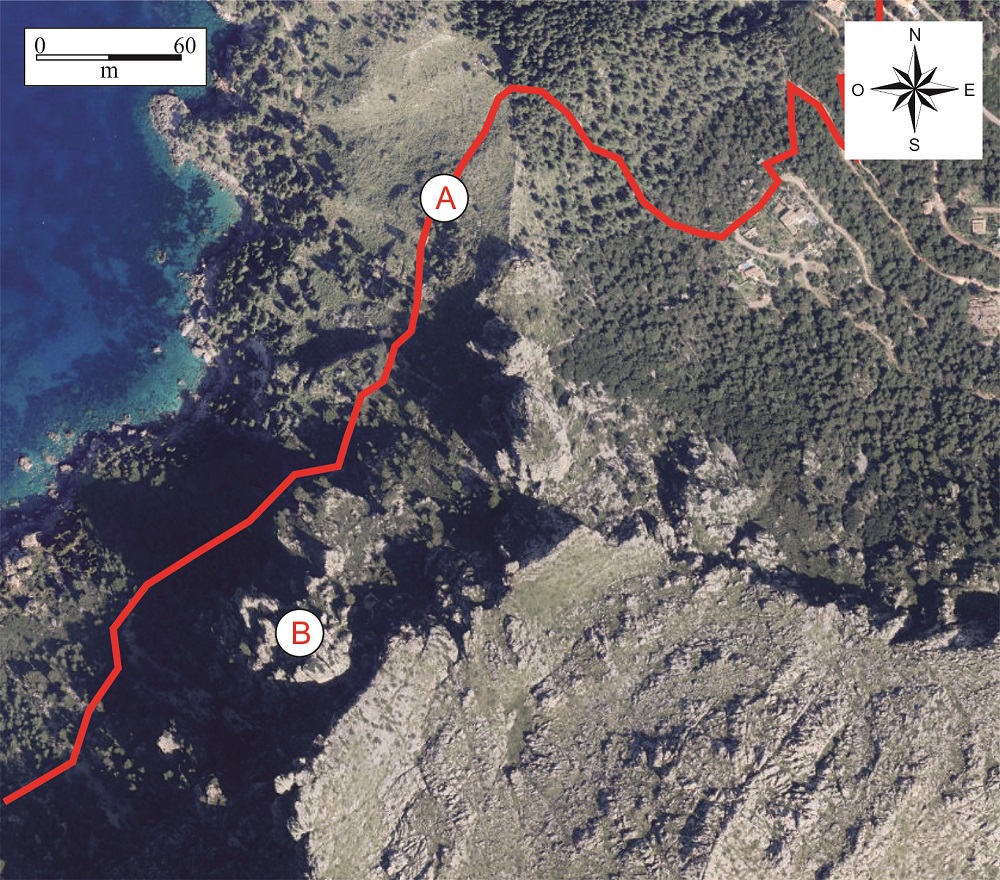
Recommended route.
The roads running along the north coast of the Serra de Tramuntana are known to suffer frequent rockfalls and landslides, particularly in winter. This is due to the steep slope of the terrain, which favours gravitational processes, and the high rainfall of this part of Mallorca.
At a larger scale there are also slope movements, although often they are not evident but are subtle landslides that are difficult to observe because they occur slowly.
At this stop we can observe, beneath the apparent stillness of the landscape, a phenomenon known as rotational landslide. This occurs when a soil becomes saturated and slides due to the force of gravity, producing a rotational movement also known as a “spoon-shaped rupture” due to the form it takes.
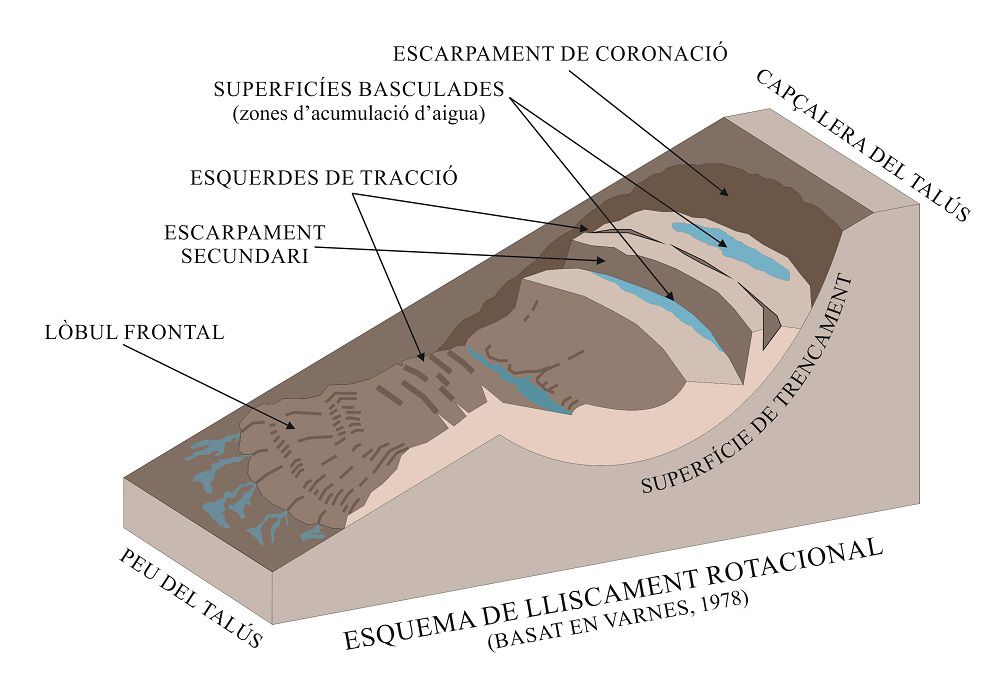
Although these slides tend to finish catastrophically and abruptly when the movement overcomes a certain threshold, they begin to show signs foreshadowing the instability of the terrain years, centuries or even millennia in advance of the event.
At Sa Costera, as in the zone near Balitx, there are a number of traction fissures which a person can easily enter, like those existing at point A.
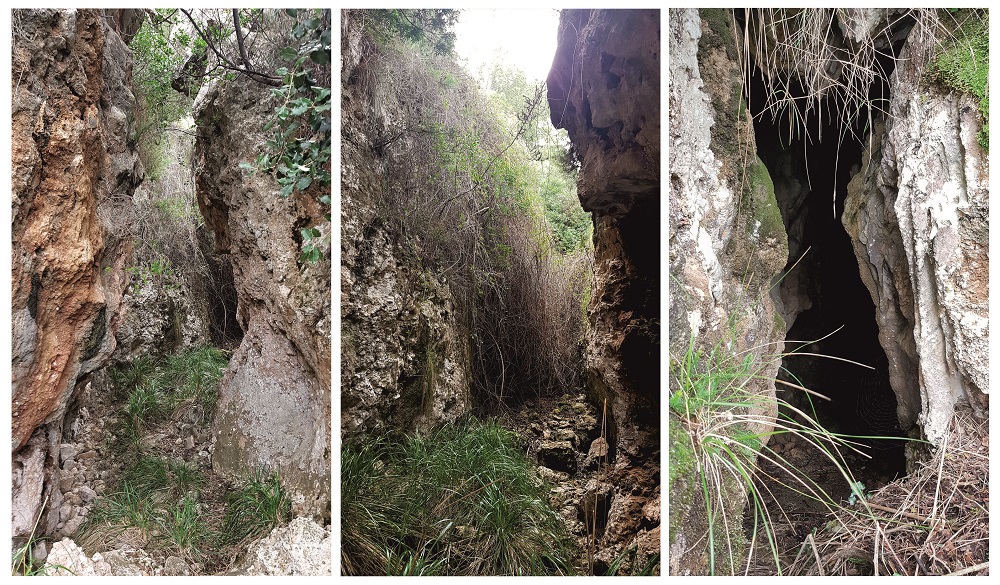
Traction fissures visible during the route.
In addition, in the rocky cliffs that overlook the path (point B), we can see several examples of lateral expansion, similar to those observed along the road at stop 1.
