The geology of Formentera is basically formed by materials from two stratigraphic periods: Late Miocene (11-6 Ma) and Quaternary (2.5 Ma to date). The latter is besides divided into two epochs: Pleistocene and Holocene.
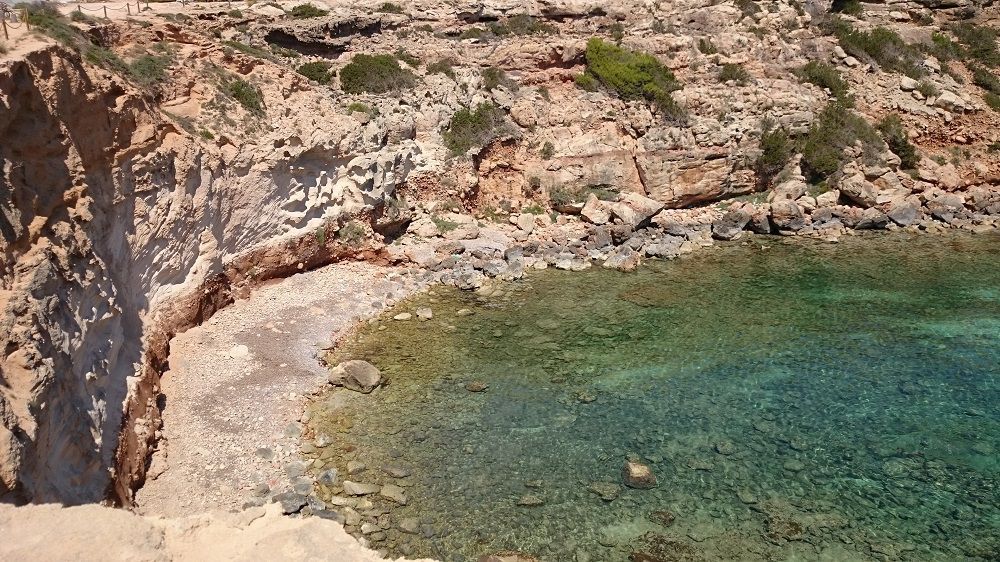
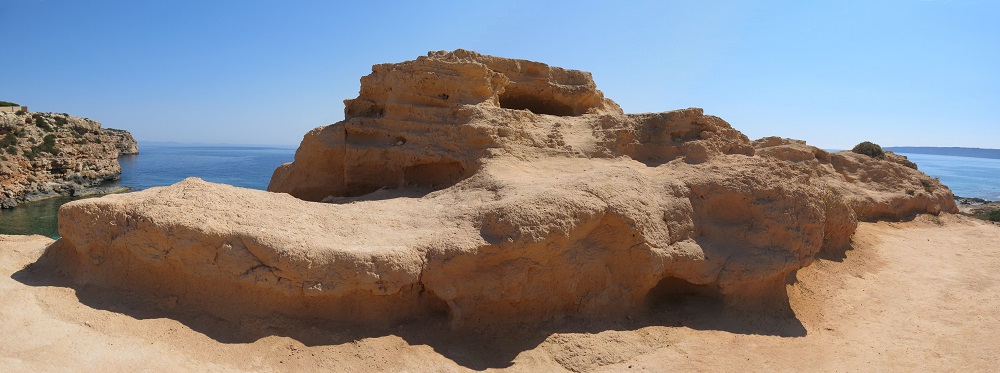
Panoramic of Cala en Baster.
One of the most outstanding places regarding the Pleistocene geological record of Formentera is, without doubt, Cala en Baster. The cliffs of this location show a well-defined stratigraphic succession and their strata reflect the climate variation of the area over the last hundred thousand years.
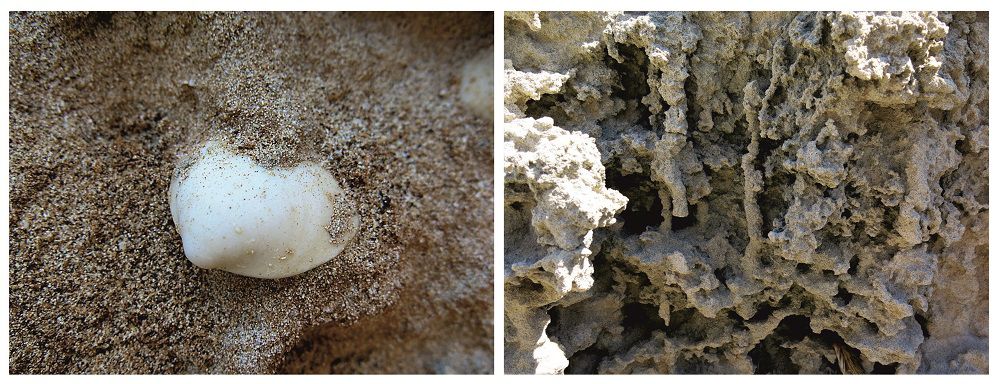
Fossils from the lower unit. Left: bivalve. Right: Rhyzocretions.
The lower levels, deposited when the current cliff was still not formed, correspond to an old beach and contain mollusc with a body protected laterally by a shell composed of two pieces or valves, generally symmetrical in a bilateral plane<strong>.</strong></p></div>">bivalve fossils. Laterally, and in the same unit, one can observe how the sediments no longer have marine fossils and, instead, they have land plant root moulds (rhyzocretions), which denotes a sandy area behind the beach, where the waves could not reach.
After this episode, a very significant change in the sedimentation occurred, proven by a unit of dark brown silts with different sized layers of Sedimentary rock whose main component is calcium carbonate (CaCO3). Its origin can be chemical, organic or detritic.</p><p><br></p></div>">limestone gravel that greatly contrasts with the landscape.
This unit was deposited by the action of an old ravine. Its colour is mainly due to the oxidation of iron minerals contained in the sediment.
At a specific time during the Late Pleistocene this fluvial deposit interrupted, and an intensive stage of dune formation began, which appears in the tectonic, eustatic or antropical processes</span></p></div>">outcrop with a clear colour and within its typical cross stratification.
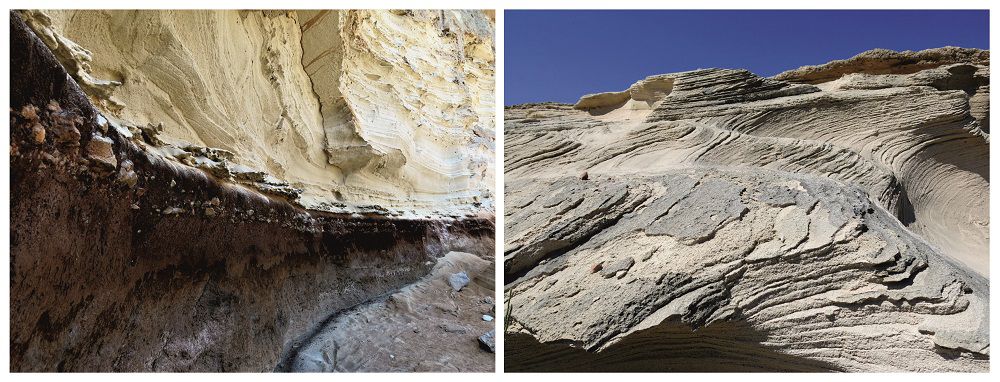
: fluvial sediments and their contact with the dunes. Right: dune stratification
This abrupt change in the deposition was the result of a decrease of sea level, which left large areas of the sandy sea bottom exposed, and were later displaced by the wind. Lithologically they comprehend calcarenites, tipically named “mares” in catalan.
Among these fossil dunes, every now and then, a fossilised shell of a land Mollusc equipped with a fleshy foot and with the body generally protected by a single-piece shell, normally in a spiral shape. The gastropods include snails and limpets, among others.<strong> </strong></p><p><br></p></div>">gastropod can be seen, which has been easily transported by the wind due to its lightness.
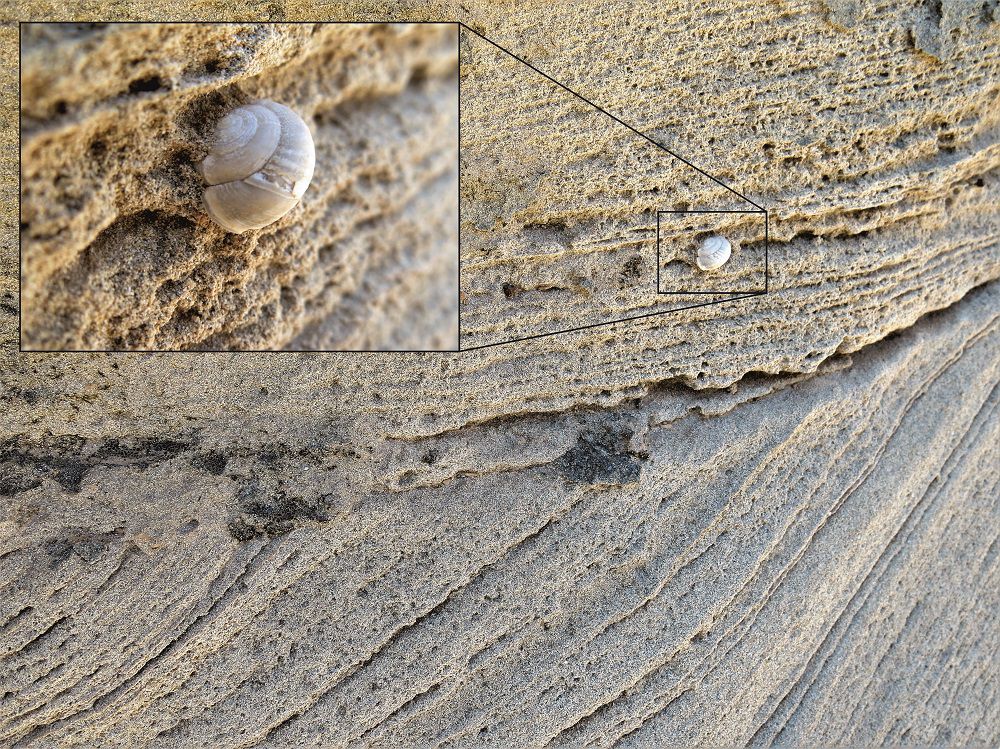
Land gastropod preserved in a dune with cross stratification.
The last unit corresponds to some more recent Quaternary dunes formed by a mix of sands and silts that give the upper part of the cliff its orange colour.
Appearance of the last unit of dunes. The action of rain on the cliff causes silts to dissolve within the water, run down its walls and stain it.
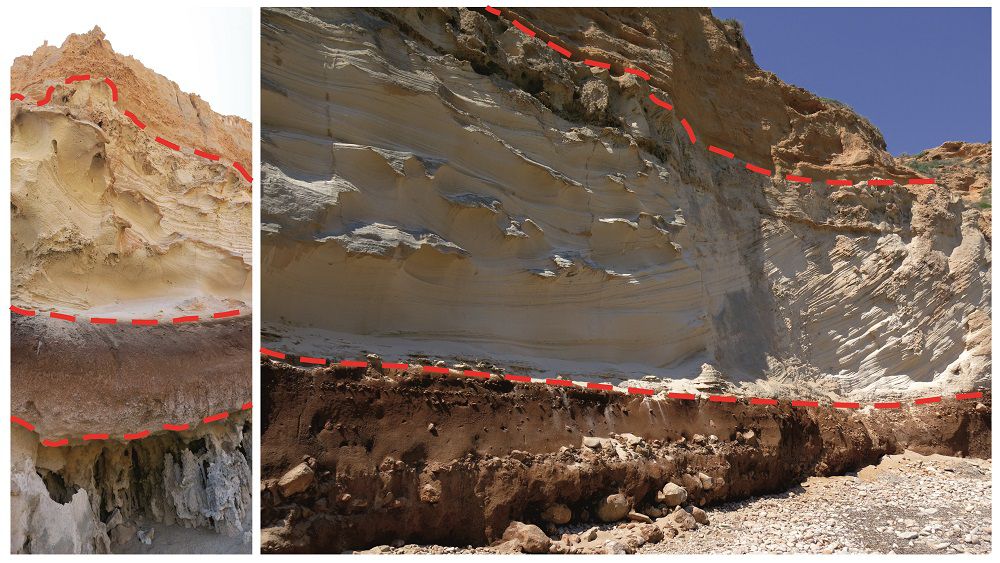
Cliff at Cala en Baster showing the Quaternary stratigraphic succession.
