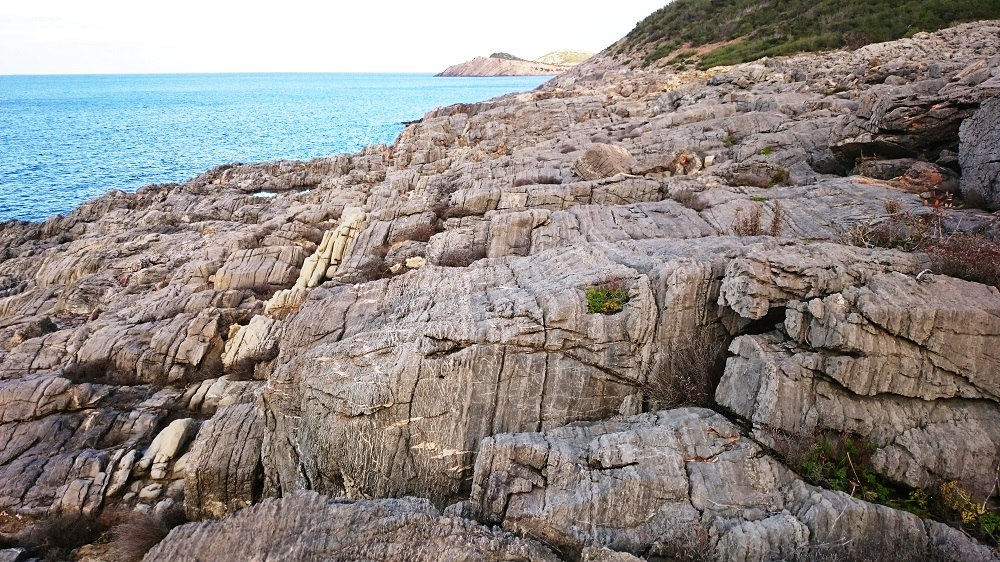
Part of the Triassic outcrop of Punta d’en Valls.
The Triassic zebra stratigraphic unit and reflect the specific environmental conditions in which they were formed.</p><p><br></p></div>">facies correspond to the oldest rocks of Eivissa. The best outcrops are located mainly between Es Puig d’en Mestre and Sa Punta d’en Valls and all around the islet of Tagomago.
They are dark grey crystalline dolomites that display abundant veins of dolomite and white calcite that give the unit its striped appearance and the name of zebra stratigraphic unit and reflect the specific environmental conditions in which they were formed.</p><p><br></p></div>">facies.
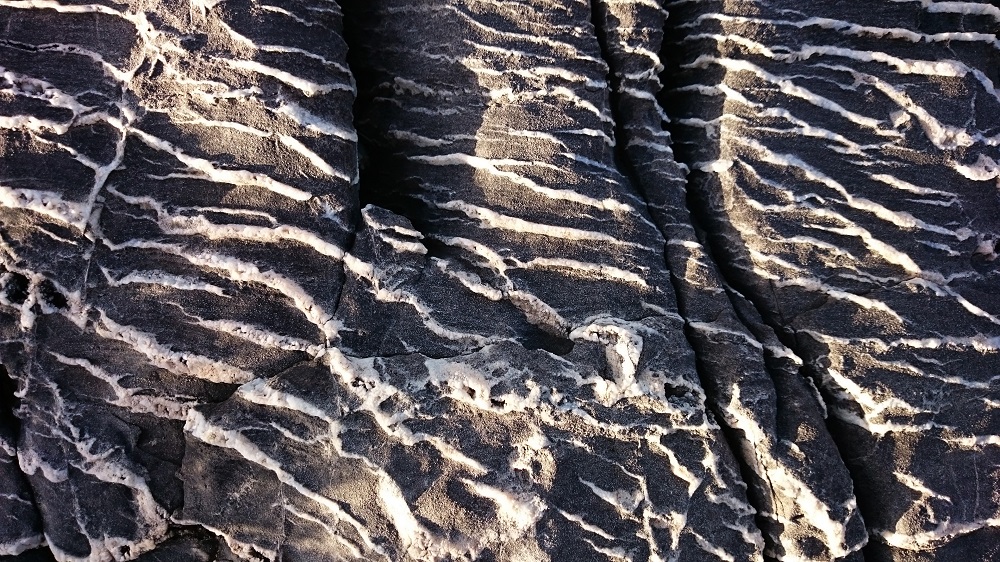
Detail of the veins of dolomite and white calcite that give the unit its striped appearance.
Due to their dolomitisation it is not possible to find fossil remains, but there are numerous traces corresponding to bioturbation of organisms that lived buried in the sediment when it was still soft.
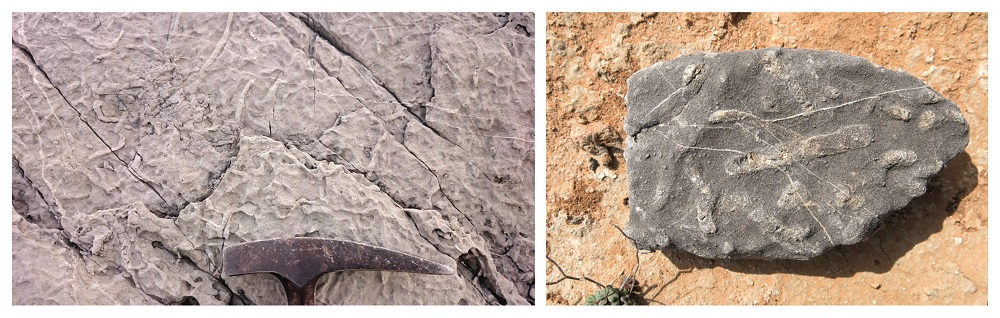
Left: remains of bioturbation. Right: detail of the bioturbation.
Above them there is a unit of dolomites and dark layered limestones lying in a discordant manner. They display a relative wealth in fossil fauna and help to date the zebra stratigraphic unit and reflect the specific environmental conditions in which they were formed.</p><p><br></p></div>">facies unit.
Both the zebra stratigraphic unit and reflect the specific environmental conditions in which they were formed.</p><p><br></p></div>">facies unit and the dolomites and layered limestones were formed from a carbonated sediment accumulated on the continental shelf under a shallow sea (Panthalassa), at the edge of the megacontinent Pangaea. This was a generally restricted environment of clear, shallow waters with intercalations of levels of tempestites.
It can be considered that episodes of scarce sedimentation occurred because it is possible to find layers of reddish, greenish and yellowish colourations between the grey strata. These layers would correspond to ferruginous crusts hardened by oxides of iron and manganese which in contact with oxygen produced the different tonalities.
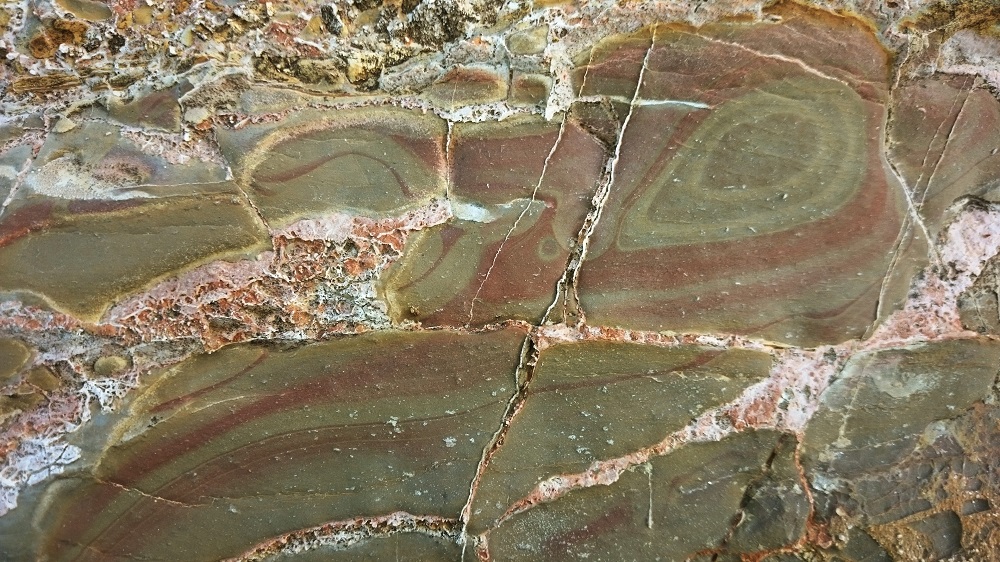
Photograph of the ferruginous crusts which can occasionally be found between the strata of grey dolomites.
Due to the tectonic compressive processes which occurred during the Alpine Orogeny, the surface of this Triassic unit was exposed. This fact is reflected in the arrangement of the strata, which are verticalised in a large part of the tectonic, eustatic or antropical processes</span></p></div>">outcrop and give rise to Fold of convex shape.</p></div>">antiform folds.
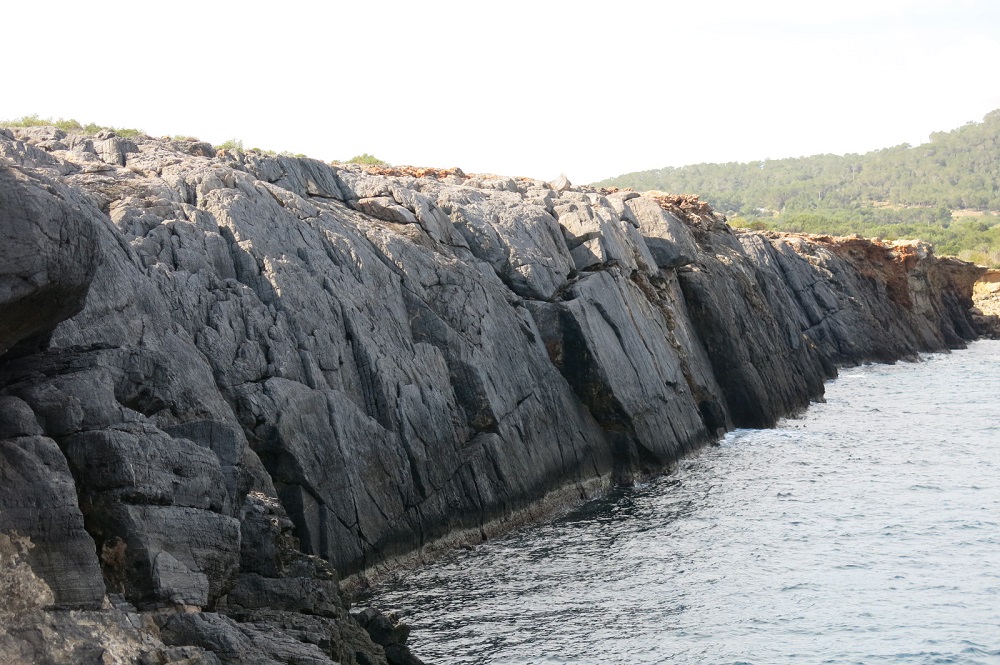
Verticality of the strata
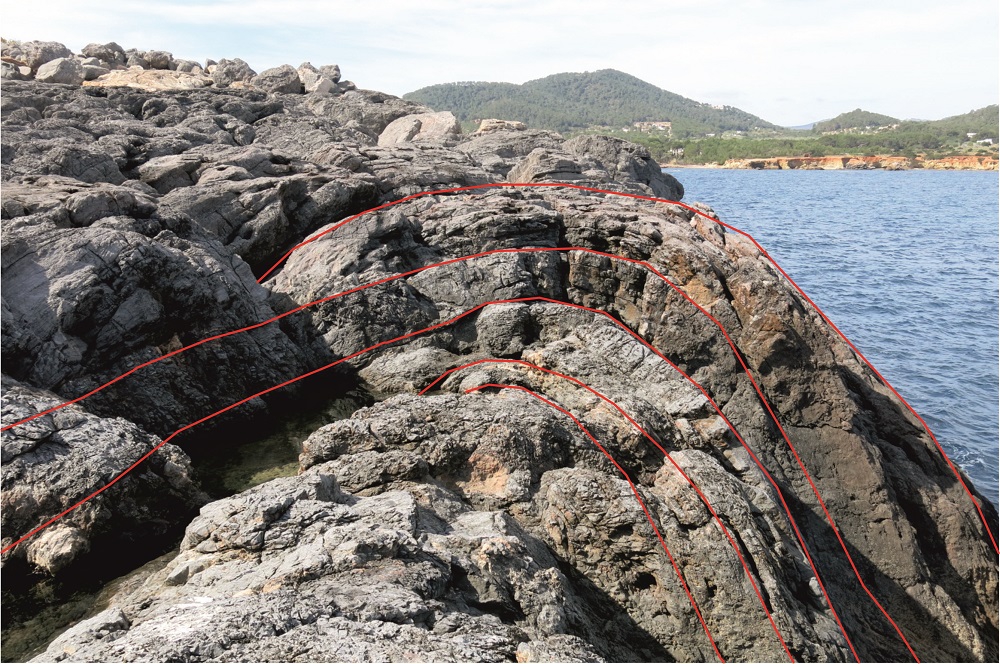
Antiform fold in the zone of n’Argeleit, halfway along the shore path towards the Punta d’en Valls.
