One of the most characteristic tectonic structures of mountain systems are thrust faults, which correspond to large masses of rock that have been mobilised and piled up onto each other by orogenic forces.
Thrust faults are generated by large reverse faults spreading along a fracture surface (sliding surface) which tends towards the horizontal and tends to coincide with the softer materials, more susceptible to being mobilised.
The materials can sometimes move several kilometres from their original position. Occasionally erosion makes a part of the thrusted rocks disappear progressively until some zones are left disconnected from the rest of the thrust. The structure resulting from this process is called a tectonic island or Tectonic outcrop in the form of an isolated topographic elevation caused by the erosion of one or more thrust fault strata. The result is an outcrop of allochthonous material surrounded by autochthonous material, also named a tectonic island.</p></div>">klippe.
One of the best examples of this type of structure, which is common in Mallorcan reliefs, is the Puig Roig.
Since the stratigraphic sequence and the thrust surface is the same in the Puig Roig as in the Puig Tomir (Moleta de Binifaldó), the interpretation is that both reliefs must have been united: that is to say, they originate from the same thrust (as is observed in this simplified diagram).
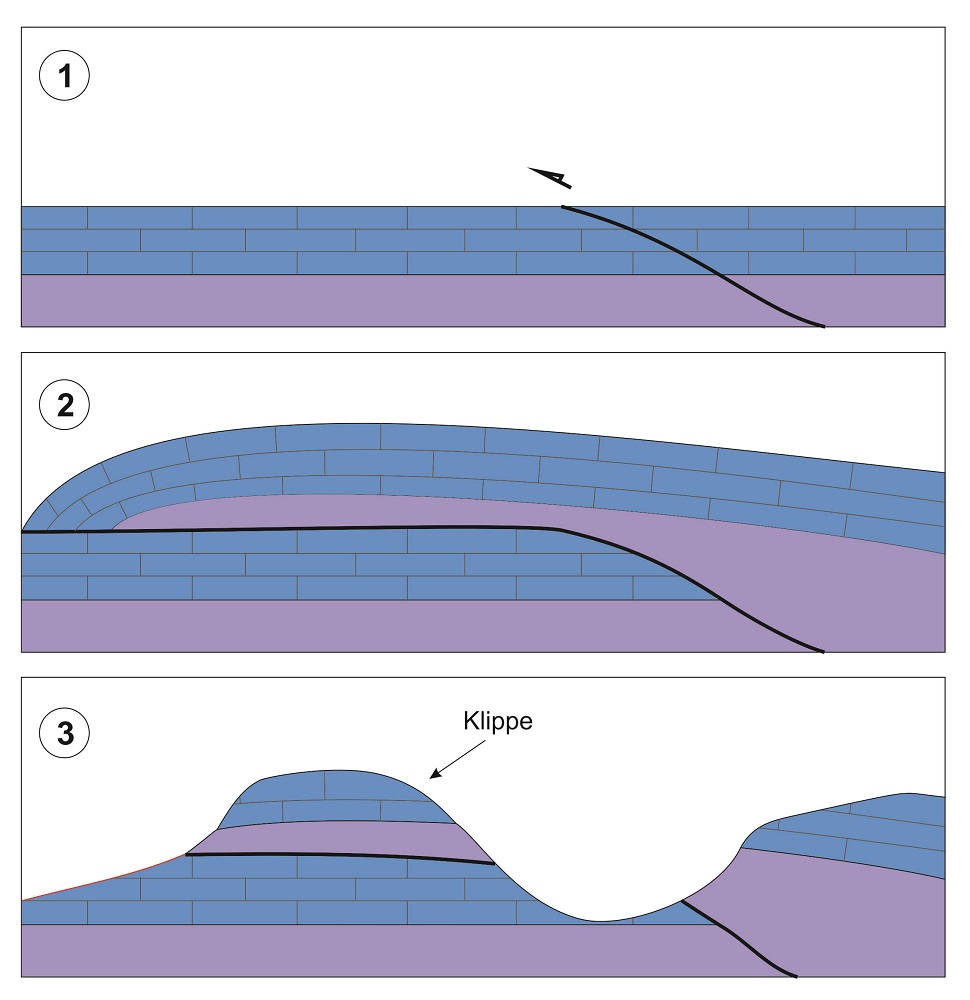
Simplified diagram of the formation of a tectonic klippe
In this case, the materials that have served as the sliding surface correspond to the Keuper stratigraphic unit and reflect the specific environmental conditions in which they were formed.</p><p><br></p></div>">facies of the Upper Triassic, normally composed of clays and gypsums, materials that deform very easily. This same level has served as the base in most of the thrust faults that form the Serra de Tramuntana.
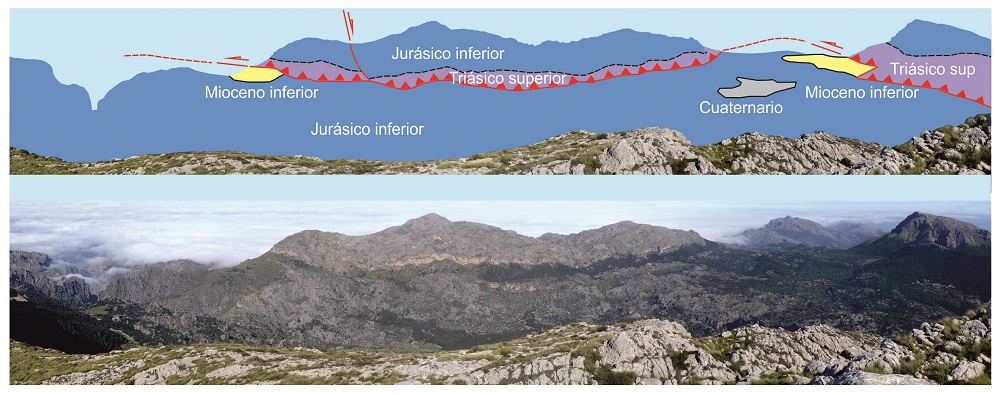
Panoramic view of the Puig Roig with its geological structure.
