| UTM-X | UTM-Y | ||
|---|---|---|---|
| STOP 1: THE QUATERNARY OF CALA SALADA | |||
| STOP 2: FOSSILIFEROUS LIMESTONE OF THE CRETACEOUS PERIOD | |||
| STOP 3: SA FORADADA ROCK BRIDGE | |||
| STOP 4: COVA ESTRUCTURAL DES VI | |||
| STOP 5: PUIG NUNÓ |
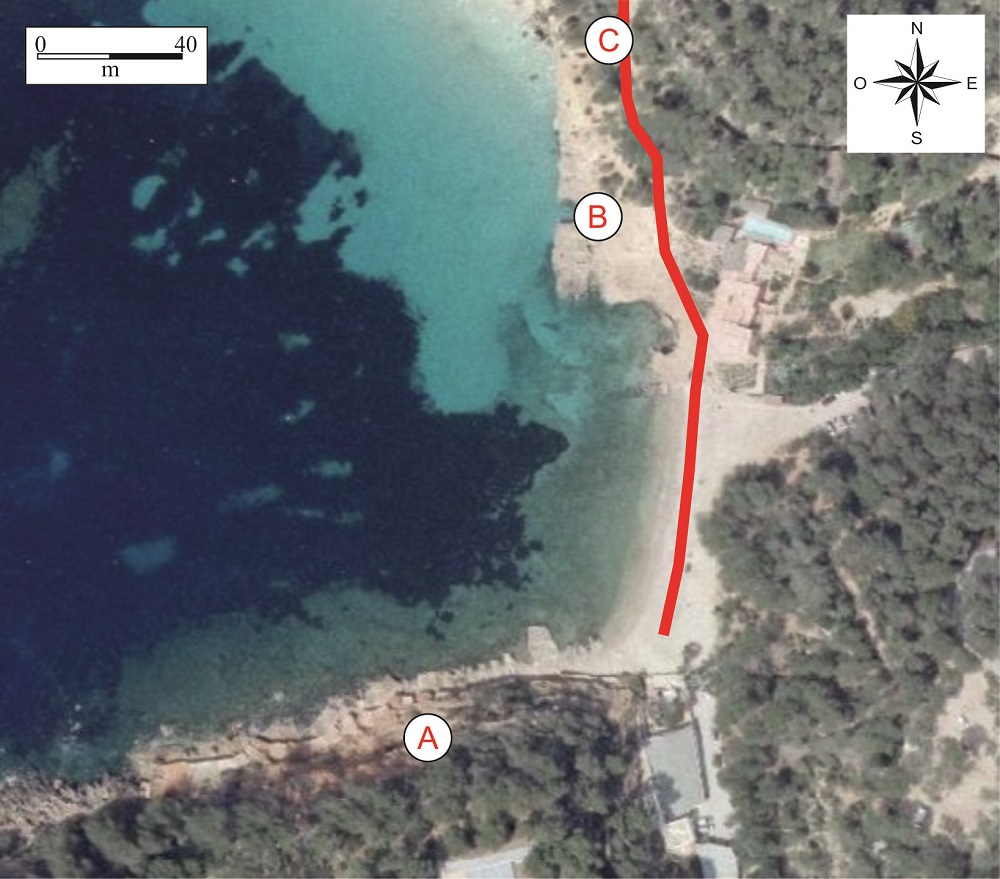
Recommended route in the Cala Salada area.
At Cala Salada beach and a large part of the cliffs that join Cala Salada and Cala Saladeta, it is possible to observe different outcrops of Quaternary materials from the Pleistocene period corresponding to old glacis, river deposits and possible aeolianites, as well as recent beach deposits.
The glacis originate from the material eroded by rainwater coming from elevated areas, and consist of a very low relief forms that accumulate in the mountain slopes. In this area they are made from red lutites with layers of gravel and pebbles surrounded by a sandy-Sedimentary rock whose main component is calcium carbonate (CaCO3). Its origin can be chemical, organic or detritic.</p><p><br></p></div>">limestone bed.
River deposits include red gravel, sand and clay deposits. At the tectonic, eustatic or antropical processes</span></p></div>">outcrop level it is very difficult to differentiate the glacis and the river deposits but on a large scale the river deposits show an elongated, narrow and slightly winding morphology.
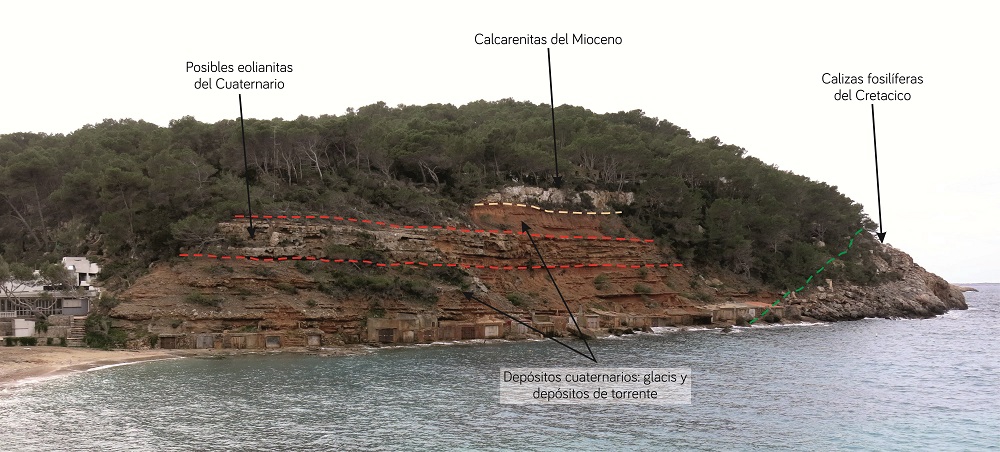
Outcrop of the quaternary deposits in contact with the Miocene calcarenites and the Cretaceous fossiliferous limestone (point A).
At the intermediate section between Cala Salada and Cala Saladeta it is possible to observe a second very important tectonic, eustatic or antropical processes</span></p></div>">outcrop of Quaternary sediments. At some points, the contact between the bottom of the Quaternary deposits and the fossil limestones of the Cretaceous period are exposed.
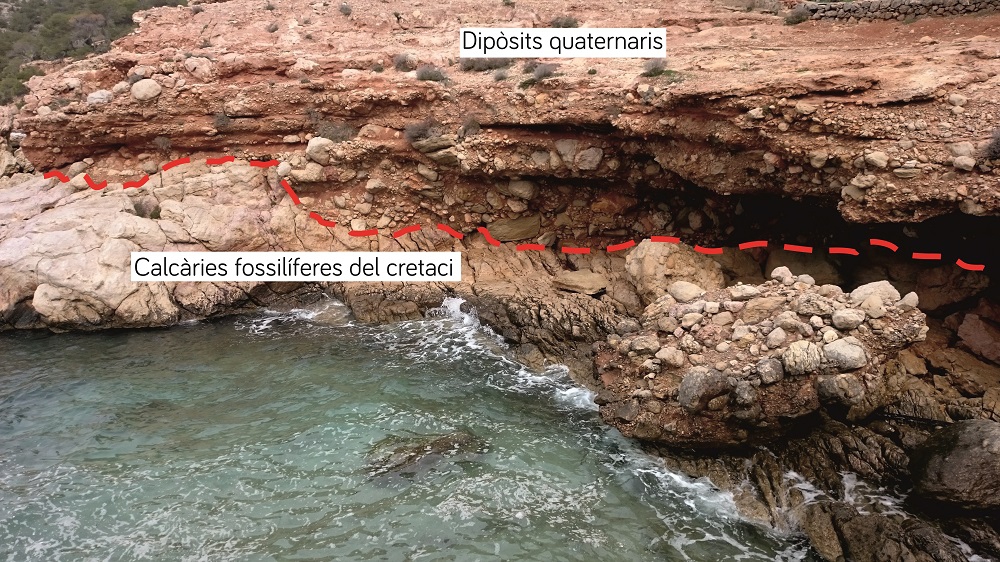
Contact between the quaternary deposits and the fossiliferous limestone of the Cretaceous period (point B).
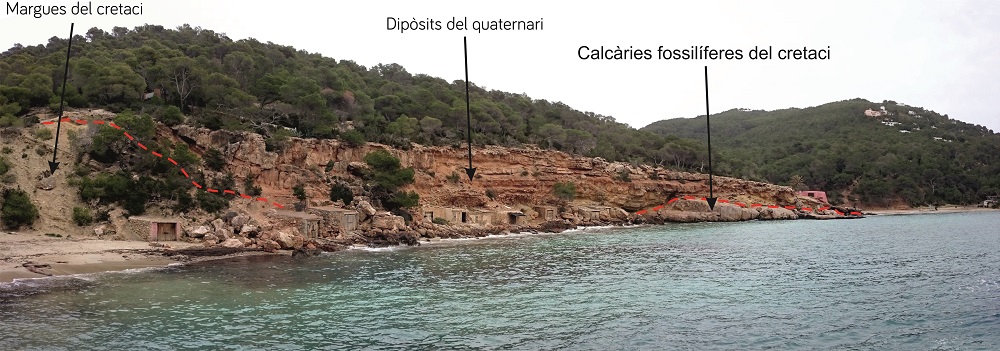
Outcrop of the Quaternary deposits and the contacts with the fossiliferous limestones and the Cretaceous marls (point C).
A study by Paul (1982) on the Pleistocene period of Eivissa and Formentera described up to 12 species of fossil land molluscs that have been found among the different mentioned outcrops. Some of these species have only been found in this area of Cala Salada and Cala Saladeta.
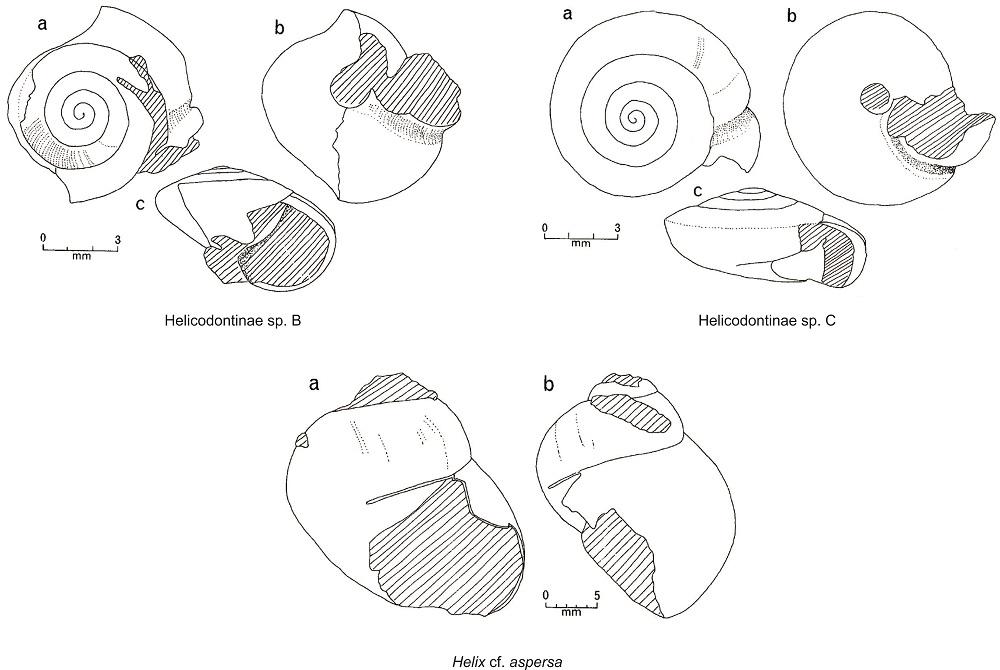
Some of the species of fossil land molluscs found in the Quaternary deposits of Cala Salada and Cala Saladeta.
Recent Quaternary deposits currently accumulate on the beaches of Cala Salada (sands and pebbles) and Cala Saladeta (mainly sand). These sediments are constantly modified and, depending on the currents and storms, the sand or pebbles predominate season by season.
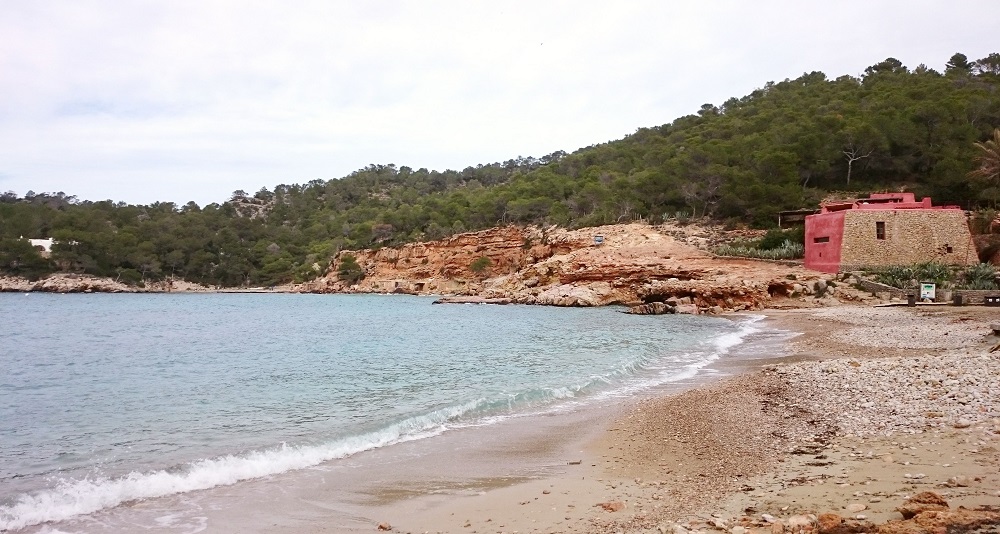
Recent Quaternary deposits on Cala Salada beach.
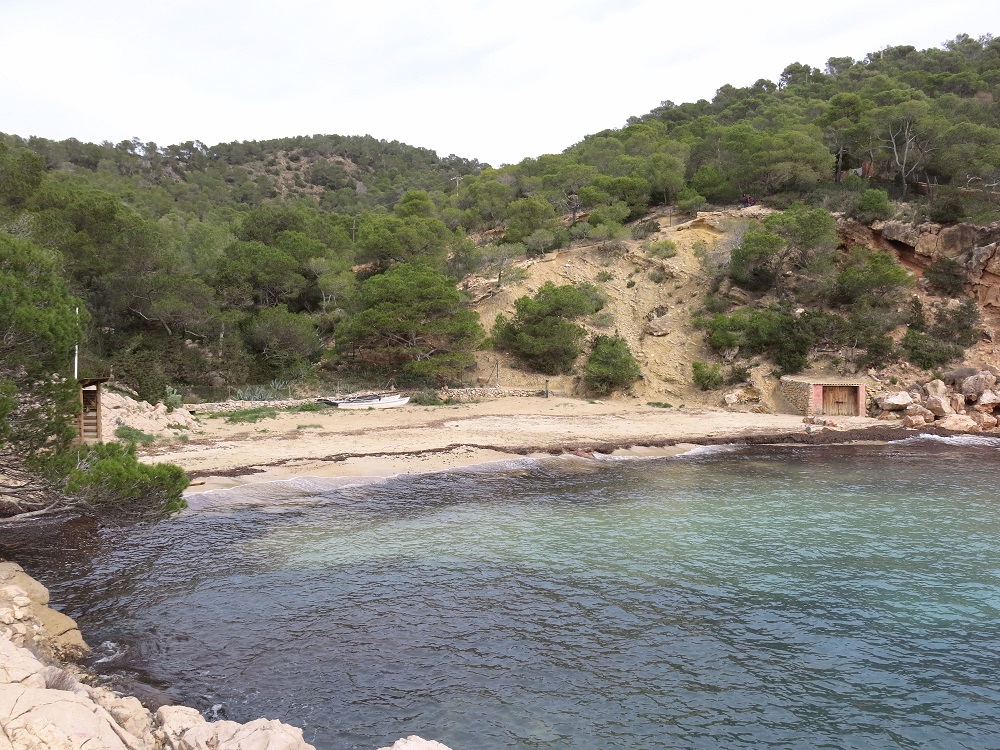
Recent Quaternary deposits of the Cala Saladeta beach.
