In the Mirador des Pontàs is possible observe one of the finest stratigraphic sections of the Upper Miocene.
The base of the cliff corresponds to the reef unit, composed of the remains of an ancient coral reef. Its upper part is eroded and has created a marine trench.
Over this eroded surface, and in a discordant manner, there stands the first section of the Santanyí Sedimentary rock whose main component is calcium carbonate (CaCO3). Its origin can be chemical, organic or detritic.</p><p><br></p></div>">Limestone Formation, from some 6 Ma ago.
The oldest section of this formation is named the Mangrove Complex and is formed by fine-grained rock, marls, with abundant vertical root moulds (rhizocretions) and accumulations of bivalves. It corresponds to a zone of tropical coastal vegetation, very similar to present-day mangrove swamps like those of Florida.
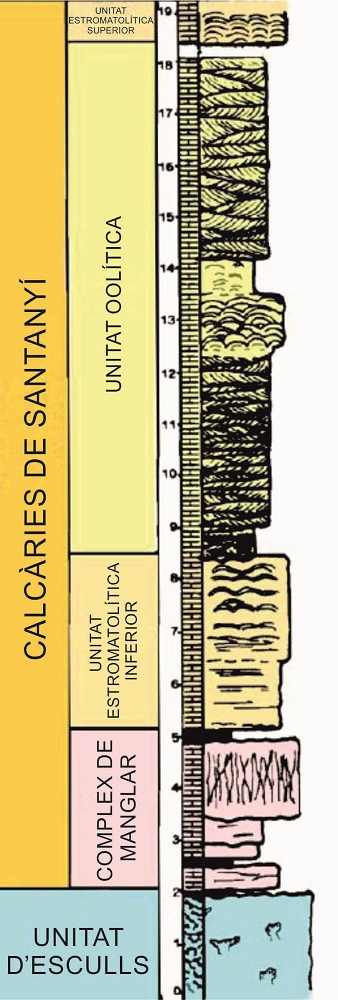
Stratigraphic column.
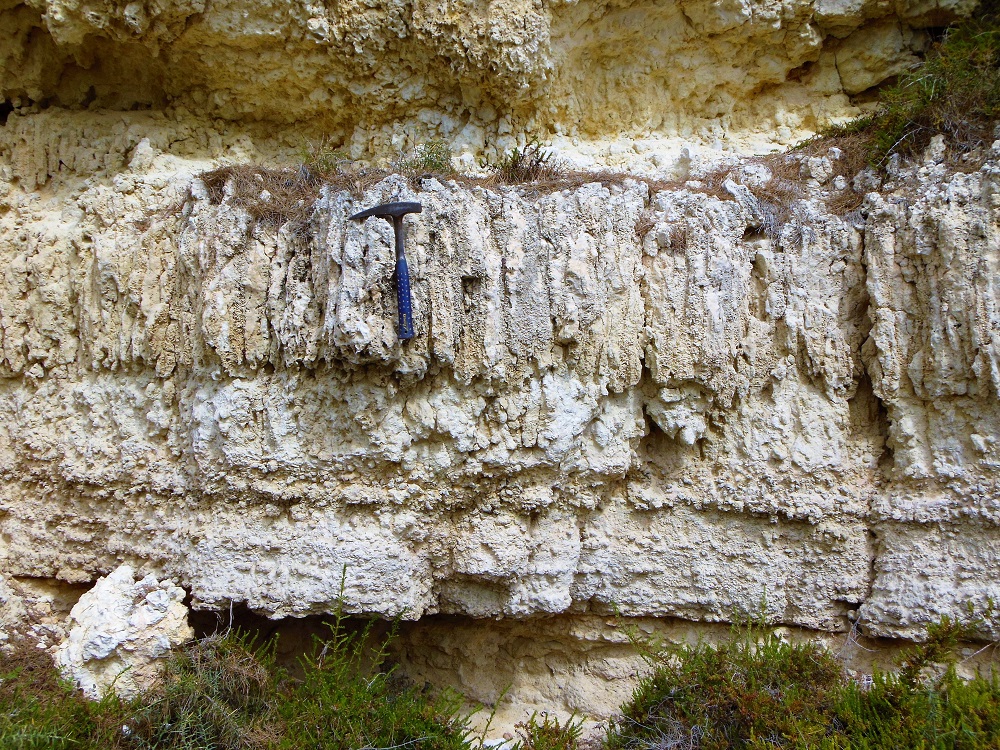
Mangrove Complex. Note the vertical marks of roots.
Above these stratigraphic unit and reflect the specific environmental conditions in which they were formed.</p><p><br></p></div>">facies lies the so-called Lower Stromatolitic Unit, mainly formed by laminated Sedimentary rock whose main component is calcium carbonate (CaCO3). Its origin can be chemical, organic or detritic.</p><p><br></p></div>">limestone structures called stromatolites and abundant mollusc with a body protected laterally by a shell composed of two pieces or valves, generally symmetrical in a bilateral plane<strong>.</strong></p></div>">bivalve molluscs.
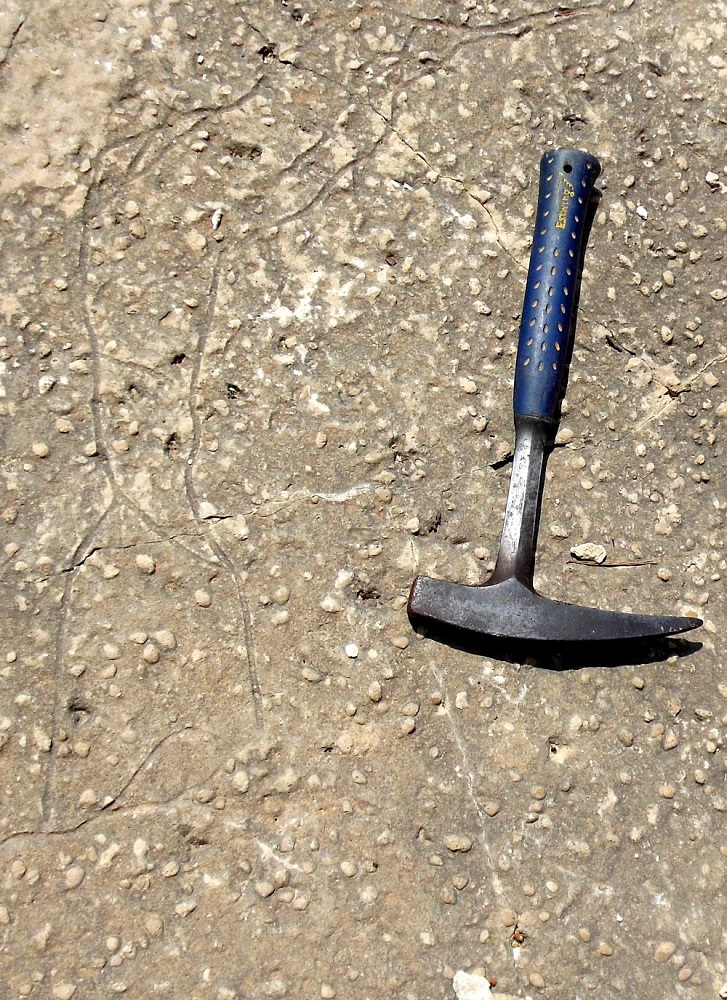
Accumulation of bivalves in a fallen block
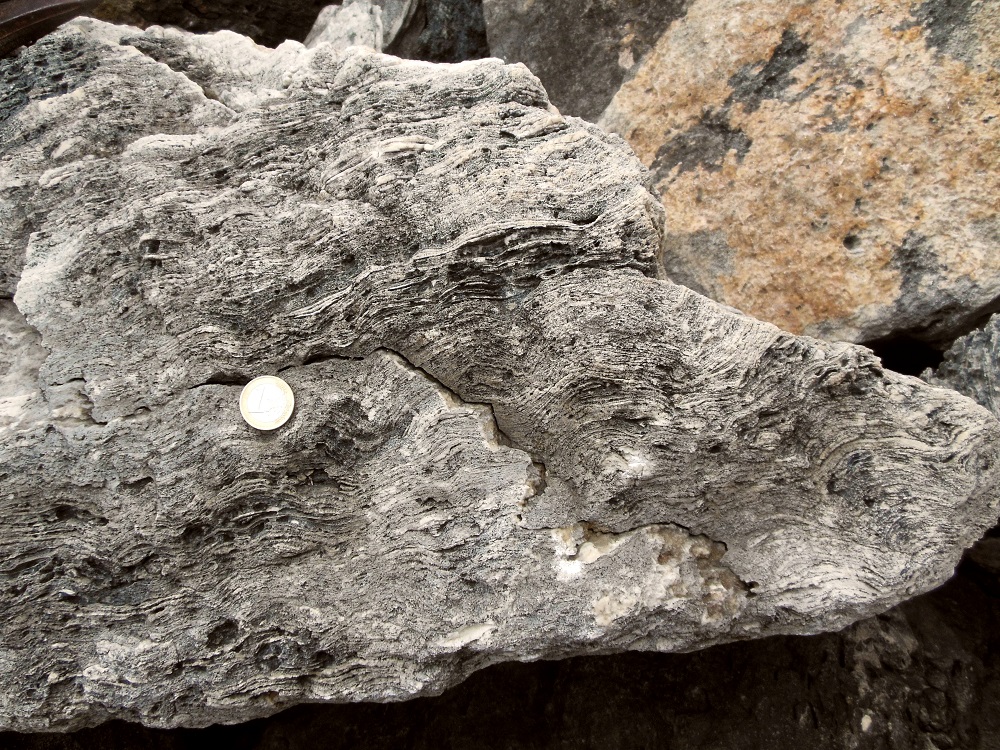
Detail of the stromatolitic laminas of the Lower Stromatolitic Unit.
Above this there appears the Oolitic Unit, which at the Mirador des Pontàs reaches a top of a stratigraphical unit or stratigraphical sequence. </p></div>">thickness of 10 metres.
The characteristic rock of this unit, highly valued for construction, is oolitic Sedimentary rock whose main component is calcium carbonate (CaCO3). Its origin can be chemical, organic or detritic.</p><p><br></p></div>">limestone, formed by countless small Sedimentary rock whose main component is calcium carbonate (CaCO3). Its origin can be chemical, organic or detritic.</p><p><br></p></div>">limestone grains called oolites. These are formed in clean, shallow and relatively agitated waters by the precipitation of calcite or aragonite around a microscopic nucleus, normally a fragment of rock or a mollusc shell.
As if they were grains of sand, the oolites are transported by the water and give rise to stratified deposits whose geometry will depend on the medium in which it was formed. In this way, in the cliffs of the Mirador des Pontàs (and in the fallen blocks) we find a wide variety of types of cross-stratification and therefore of sedimentary environments.
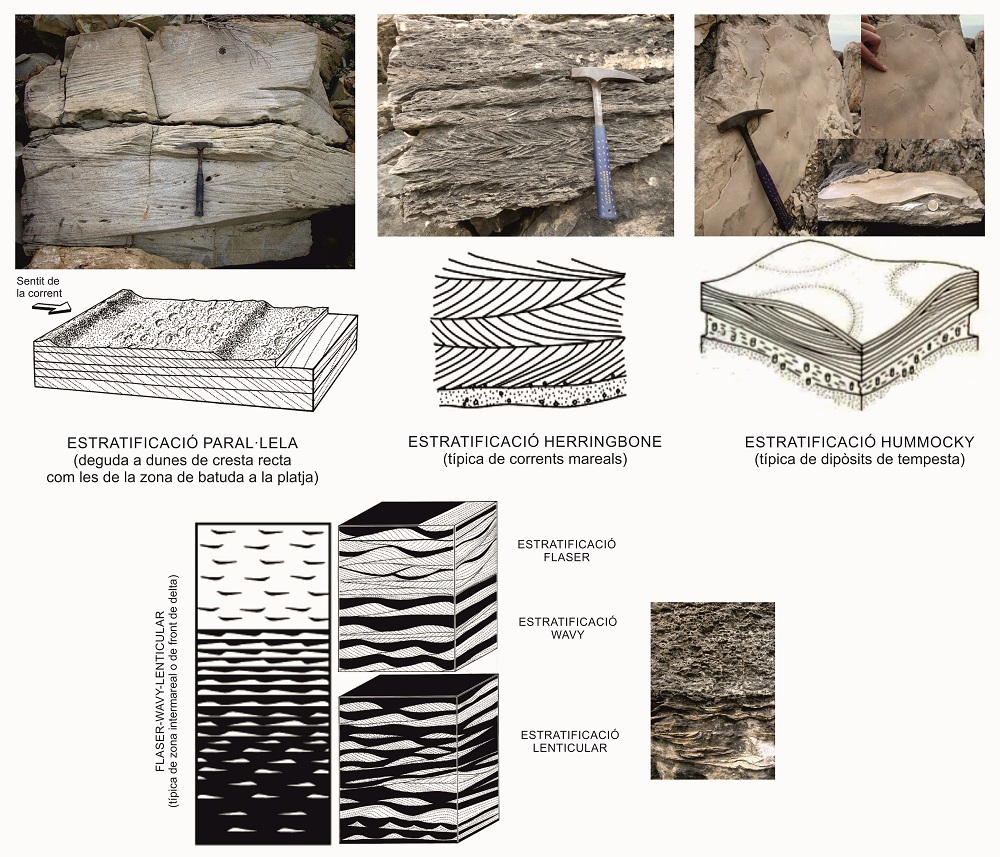
Different types of stratification found in the Oolitic Unit.
Finally, we can point out the presence of a collapse which affects the mangrove stratigraphic unit and reflect the specific environmental conditions in which they were formed.</p><p><br></p></div>">facies and the lower stromatolitic unit and can be seen in the cliff at the height of the marine trench.
These collapses are very frequent in this type of materials and can attain large dimensions, like some that are observed in the cliffs of the Santanyí zone.
In the same zone we can also see a littoral collapse cave which has developed underneath the Es Llombards residential area.
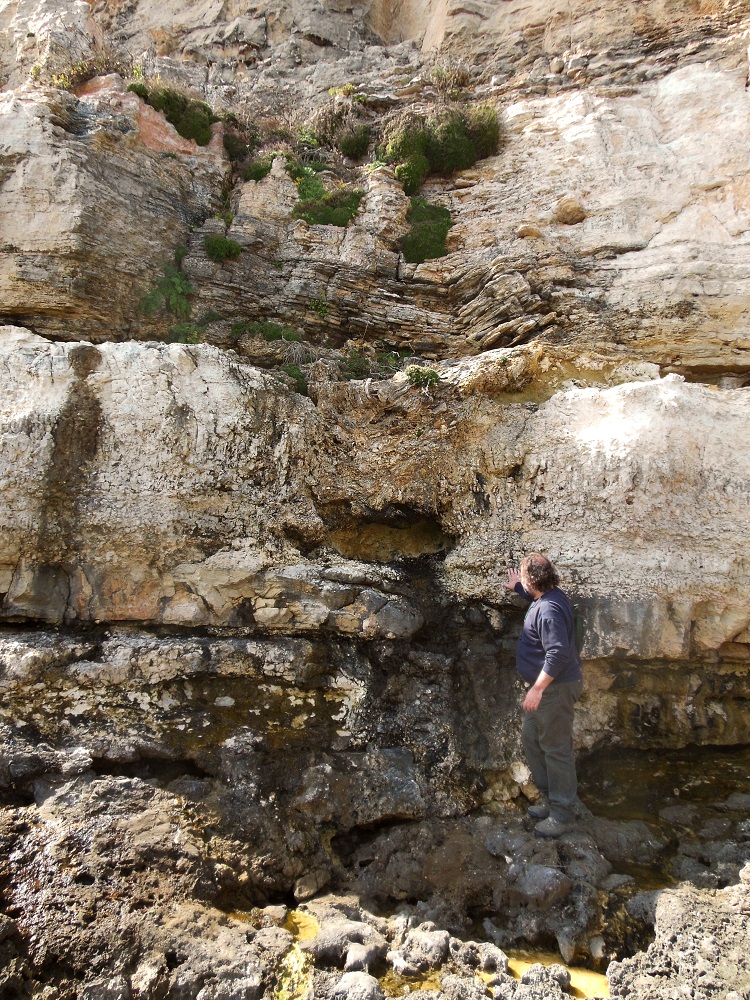
Collapse which affects the mangrove facies and the lower stromatolitic unit.
