On the western edge of the cove of S’Arenal d’en Castell, we find one of the best places to recognise the rocks that constitute Menorca’s middle Triassic geological series (formed between 240 and 230 million years ago) and most certainly with the most spectacular outcrops from this period on the island.
S’Arenal d’en Castell is an almost circular cove flanked by dolomites from the Jurassic to the east and by rocks from the Triassic to the west. At the end of the beach on its western edge, we can clearly see the contact between the Sedimentary rock whose main component is calcium carbonate (CaCO3). Its origin can be chemical, organic or detritic.</p><p><br></p></div>">limestone and dolomites that form the middle Triassic geological series and the red and yellow marls sedimented later in the upper Triassic.
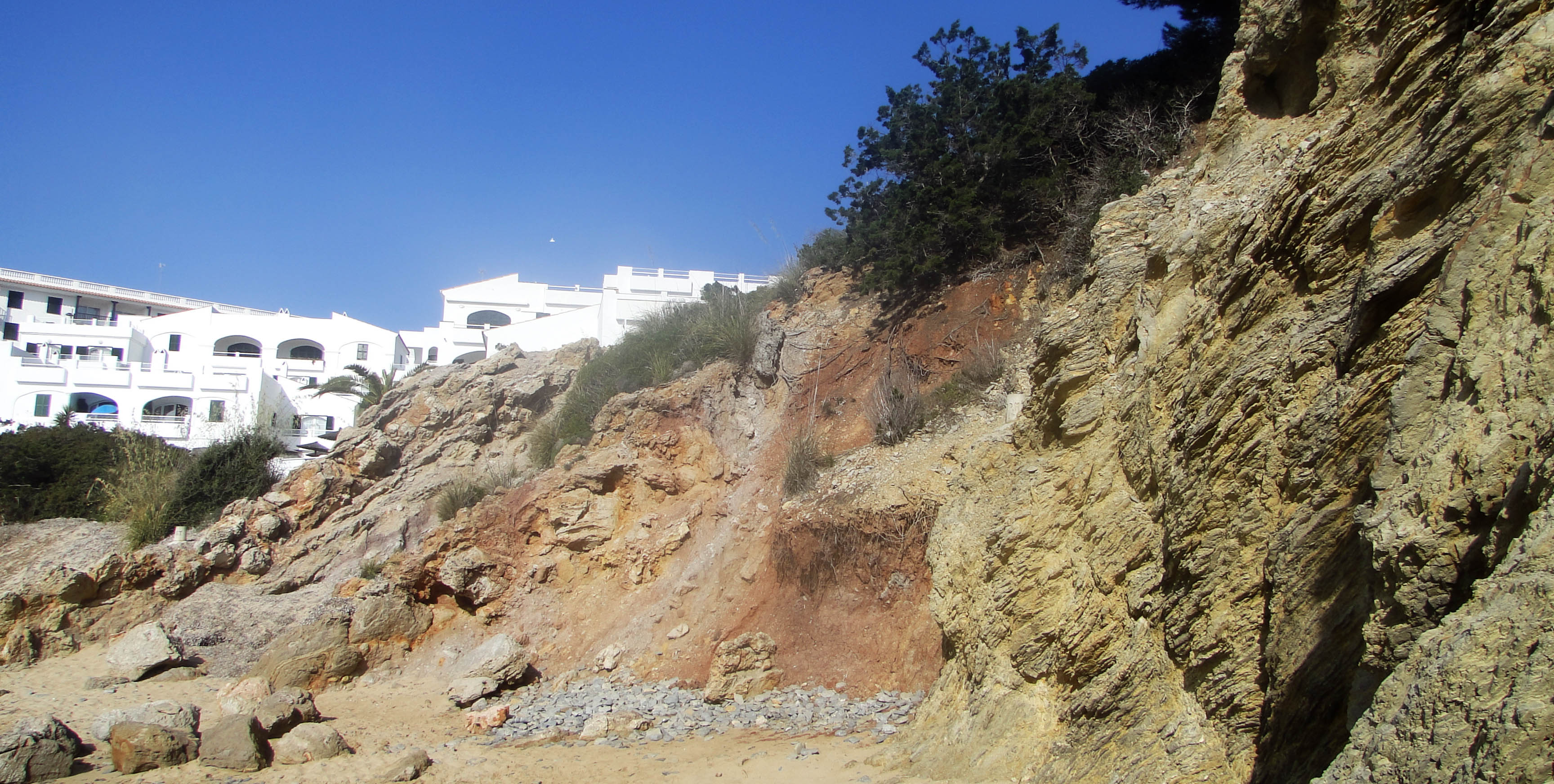
The western end of the sandy beach. Geological contact between the grey, middle Triassic limestone (right) and the soft red and yellow upper Triassic marls (left).
The Sedimentary rock whose main component is calcium carbonate (CaCO3). Its origin can be chemical, organic or detritic.</p><p><br></p></div>">limestone that we find from this point on the promontory, which closes the cove on the western edge, displays splendid outcrops from the middle Triassic geological series. Visitors’ attention will be especially taken by the magnificent folds that affect the finely-stratified Sedimentary rock whose main component is calcium carbonate (CaCO3). Its origin can be chemical, organic or detritic.</p><p><br></p></div>">limestone rocks. Among the Sedimentary rock whose main component is calcium carbonate (CaCO3). Its origin can be chemical, organic or detritic.</p><p><br></p></div>">limestone, we see the first layers of marls (that we know as stratification joints) which gave these rocks the plasticity they needed to create such sharp folds.
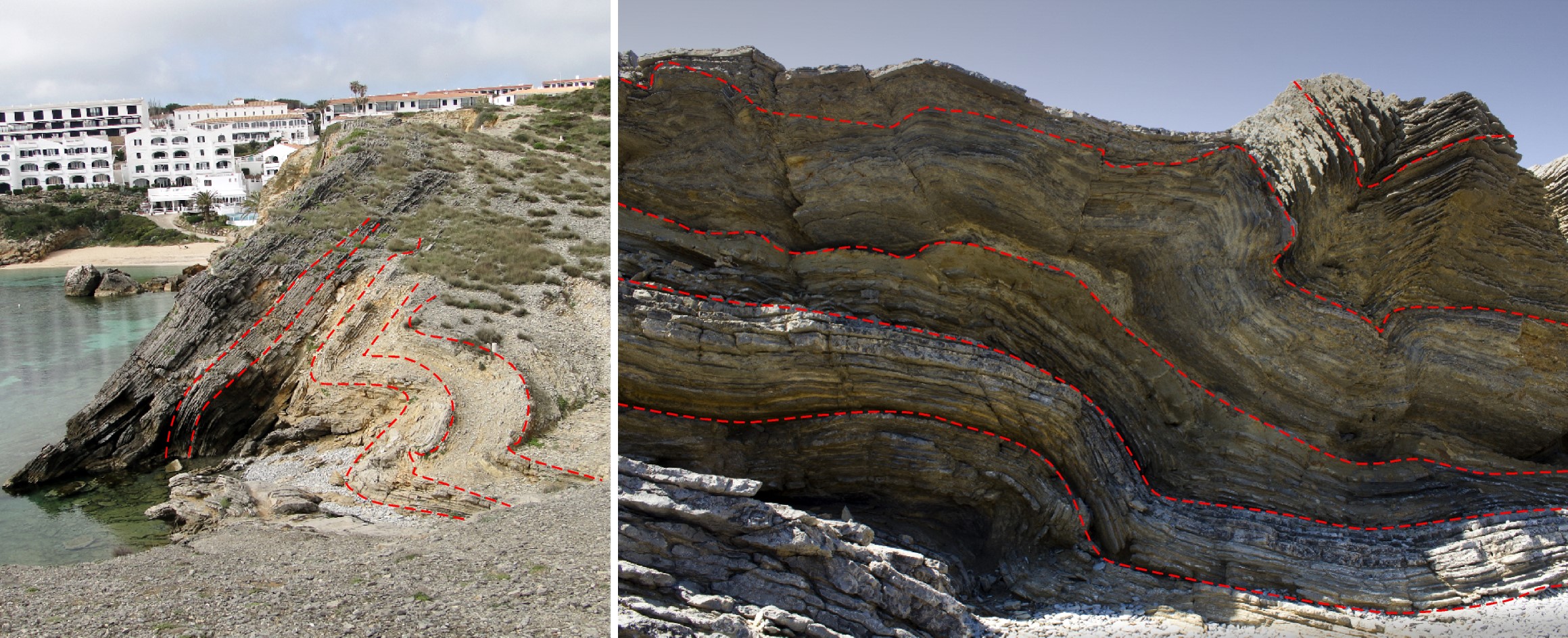
The Triassic rocks at S’Arenal d’en Castell are severely folded tectonically. The photographs show folded and undulated layers in the middle Triassic limestone on the cove’s western promontory.
These rocks contain fossil remains, including those of a number of bivalves (molluscs) that only lived during the middle and upper Triassic, making this a guide fossil, in other words, a fossil that is used to define and identify a specific geological period. Unfortunately, the fossil-hunting that has affected this and other palaeontological deposits on the island makes it difficult to locate this fossil in the field. If you want to identify a fossil, you must not remove it and you must leave it where it was found, so that everyone who visits the Site of Geological Interest can enjoy it and not contribute to the fossil-hunting that affects the area.
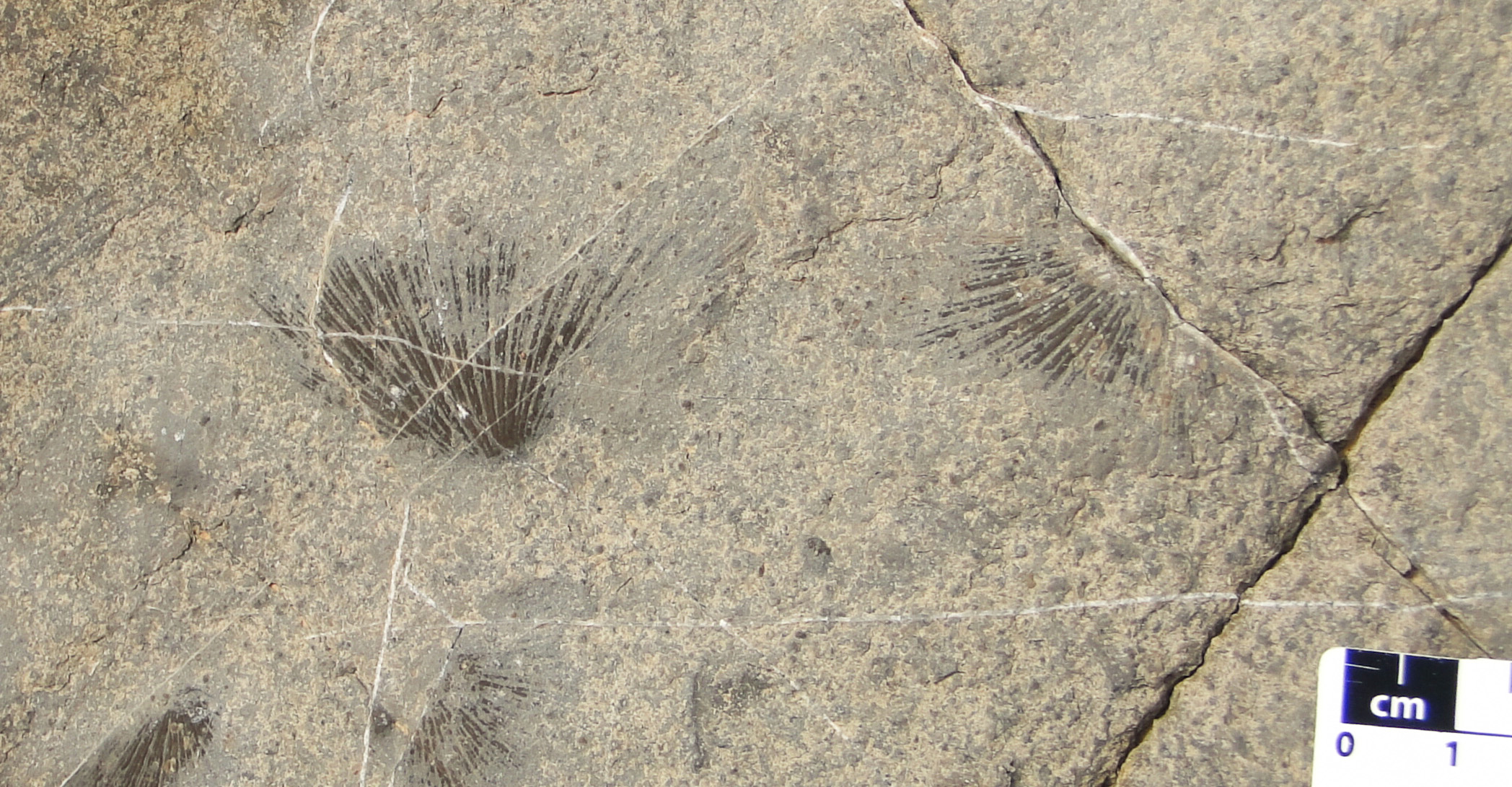
Daonella fossils at S’Arenal d’en Castell, a bivalve with a ribbed shell, characteristic of middle and upper Triassic rocks.
In some layers, you can easily identify flint nodules, rounded, globular masses, measuring centimetres to decimetres, with a different composition to that of the rock in which they are embedded. In this case, the flint is included in a Sedimentary rock whose main component is calcium carbonate (CaCO3). Its origin can be chemical, organic or detritic.</p><p><br></p></div>">limestone rock.
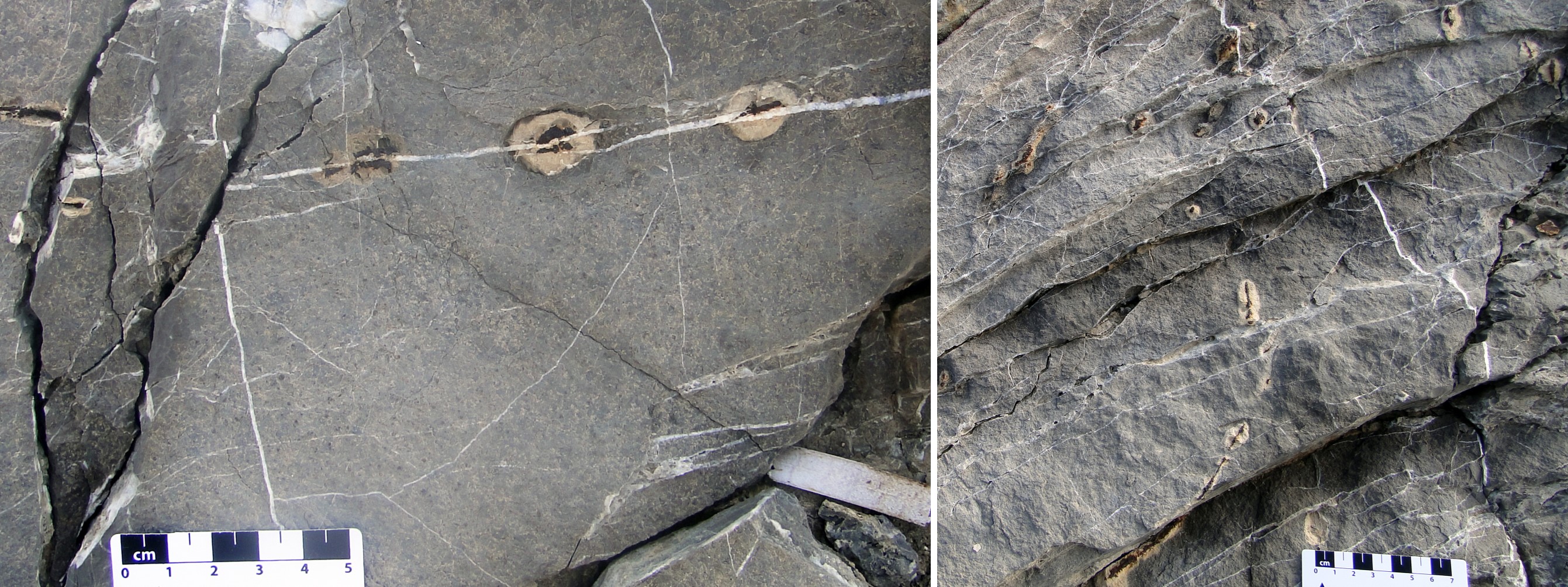
Flint nodules on lower levels of the middle Triassic limestone of S’Arenal d’en Castell.
Another characteristic of the area is the presence of bioturbation structures, marks in the form of tubes made by animals in the sediments, when these had not yet hardened and which are the product of excavation activity by unknown organisms, probably crabs.
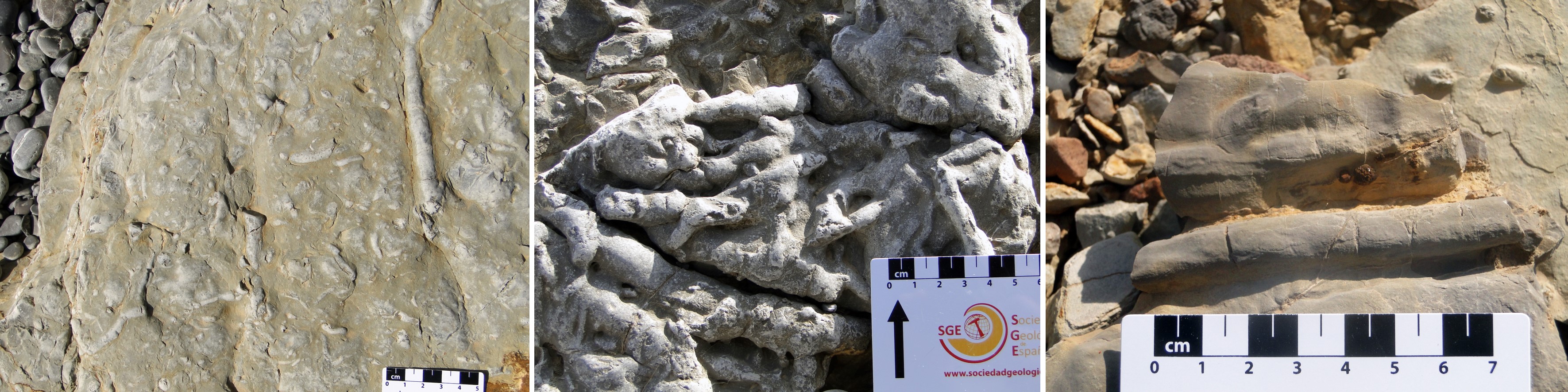
Bioturbation in the limestone rocks, very often in blocks that have fallen from the cliff where the sea has eroded the softest parts (most marled), highlighting the tubes made by the organisms.
The different rocks that comprise the middle Triassic geological series at S’Arenal d’en Castell can be seen especially in a small Tramuntana-facing rocky beach on the edge of this promontory, which has the best outcrops in the area. Of particular interest are the very sharp folds, known as ‘chevron’ folds, a series of folds where the area with the greatest curvature (the hinge) is angular instead of rounded.
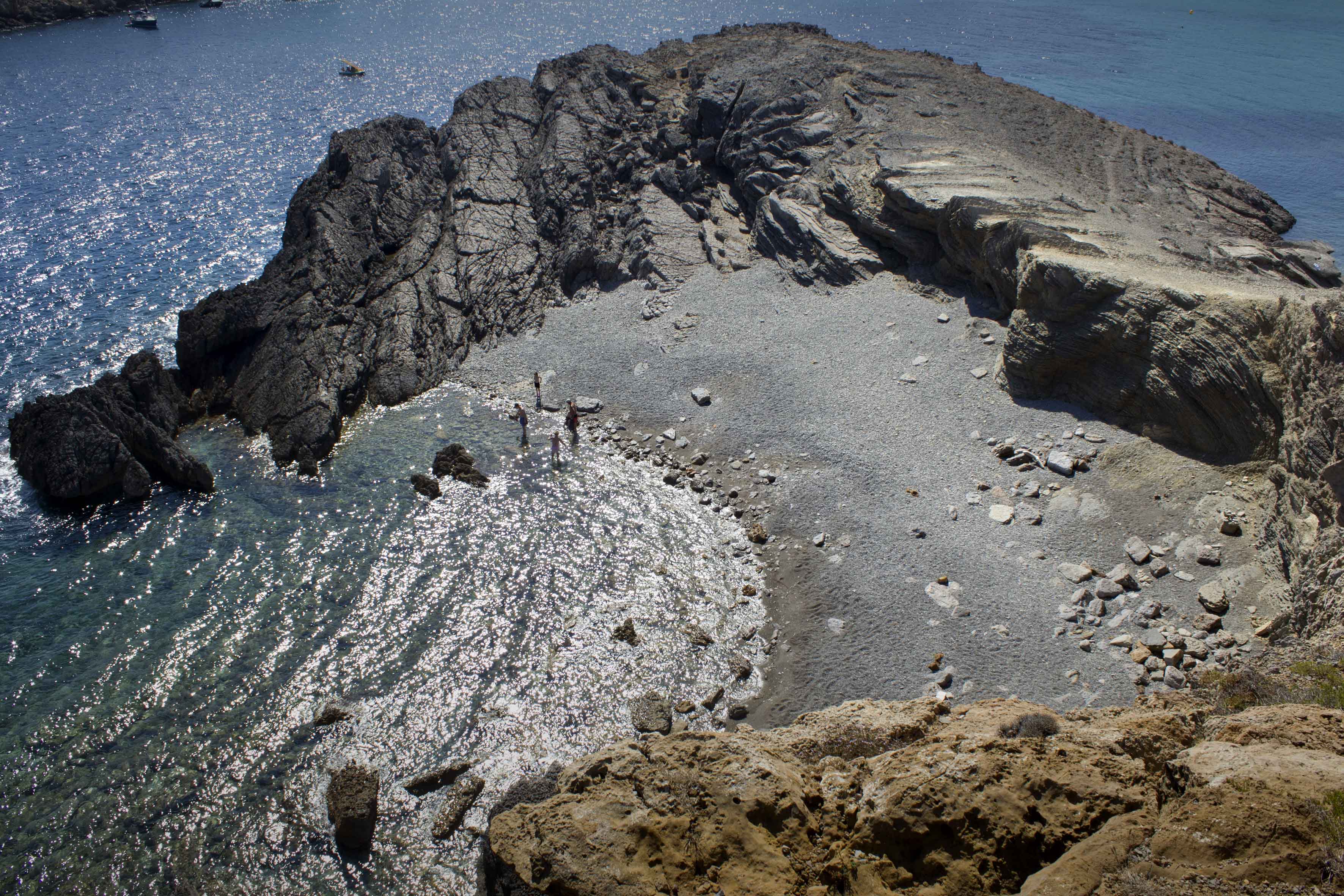
View of the shingle beach that is of great interest for recognition of the geological series of the Site of Geological Interest.
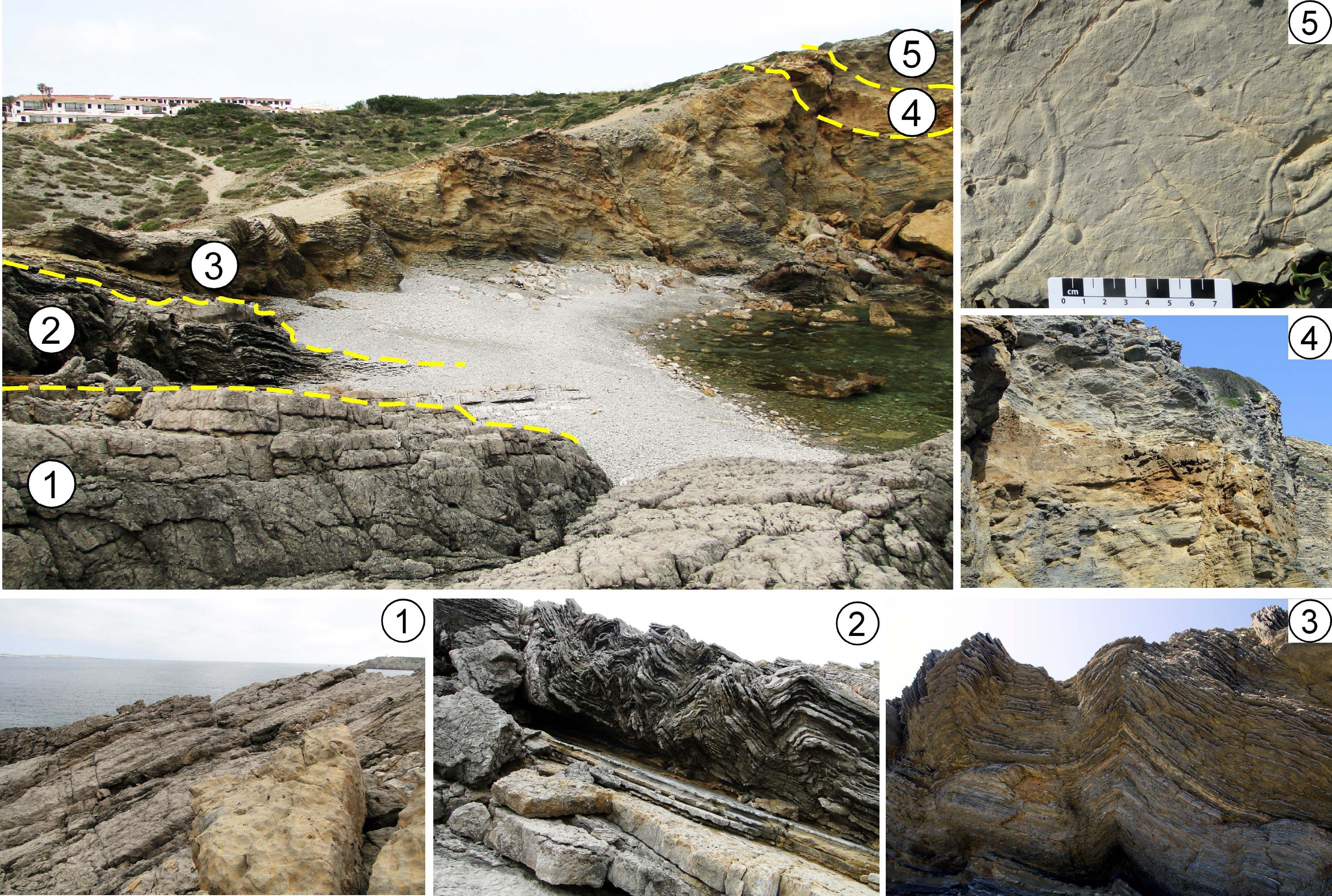
Rocky beach on the eastern edge of the promontory that closes the cove. From the oldest to the youngest, and therefore from the bottom upwards, we see Sedimentary rock whose main component is calcium carbonate (CaCO3). Its origin can be chemical, organic or detritic.</p><p><br></p></div>">limestone with a level of marls and Sedimentary rock whose main component is calcium carbonate (CaCO3). Its origin can be chemical, organic or detritic.</p><p><br></p></div>">limestone with thick strata with traces of bioturbation and flint nodules in the upper part (1). We now see Sedimentary rock whose main component is calcium carbonate (CaCO3). Its origin can be chemical, organic or detritic.</p><p><br></p></div>">limestone with fossil remains and fine highly-folded Sedimentary rock composed of clay rich in calcium carbonate. </p></div>">marl intercalations in the upper part (2). Following on from these, we have more Sedimentary rock whose main component is calcium carbonate (CaCO3). Its origin can be chemical, organic or detritic.</p><p><br></p></div>">limestone with stratification joints comprising brown-yellow, sharply folded marls (3). Above this, on the cliff, we see a series of massive, light ochre-coloured dolomites (4), followed by another level of highly bioturbated Sedimentary rock whose main component is calcium carbonate (CaCO3). Its origin can be chemical, organic or detritic.</p><p><br></p></div>">limestone with medium to fine stratification and Sedimentary rock composed of clay rich in calcium carbonate. </p></div>">marl stratification joints (5).
