The islets of Es Vedrà and Es Vedranell are a good example for understanding the magnitude of the tectonic forces that formed and structured the Balearic Islands during the Alpine Orogeny, which created those islets in a period between 14 and 12 Ma ago.
They are the result of a fault
<div class="ql-editor"><p class="ql-align-justify">Inverse fault in which the stratification plane.</p><p><br></p></div>">dip of the fault plane is at a low angle (generally less than 45<sup> o</sup>). It tends to refer to large-scale (regional) structures.</p><p><br></p></div>">thrust fault which caused the sliding of limestones and calcarenites of the Upper Jurassic– Lower Cretaceous (approx. 145 Ma) over the marls of the Miocene (approx. 20–13 Ma).
Approximate course of the thrust fault affecting the islets of Es Vedrà and Es Vedranell.
As limestones and calcarenites are very resistant compared with marls, the differential erosion caused the former to remain as a buttress that created the cliffs (in some cases up to 388 m in height), while the marls formed the gentler reliefs covered with vegetation.
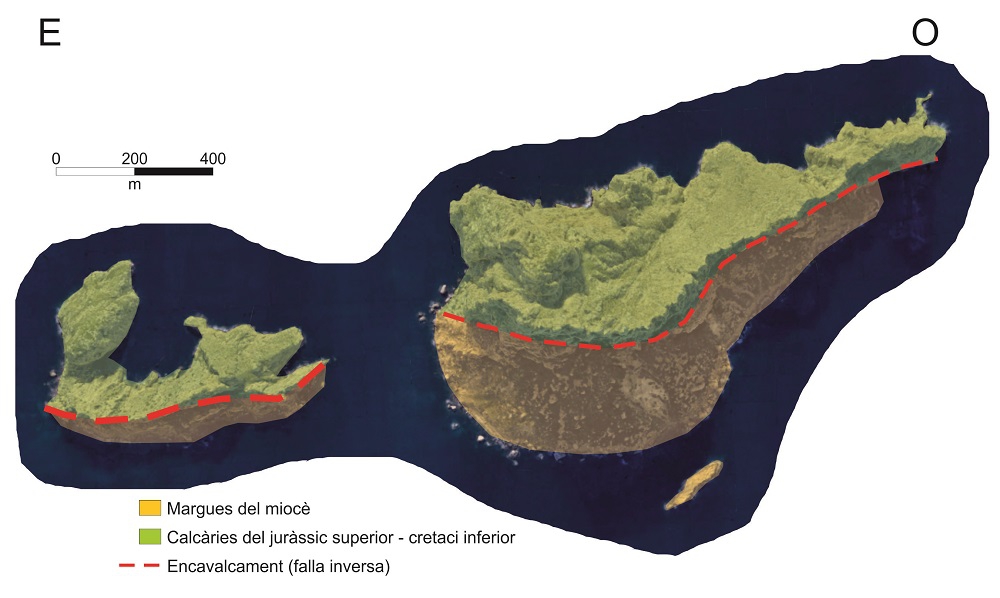
Schematic cartography of the lithologies which outcrop in the islets and are affected by the thrust fault.
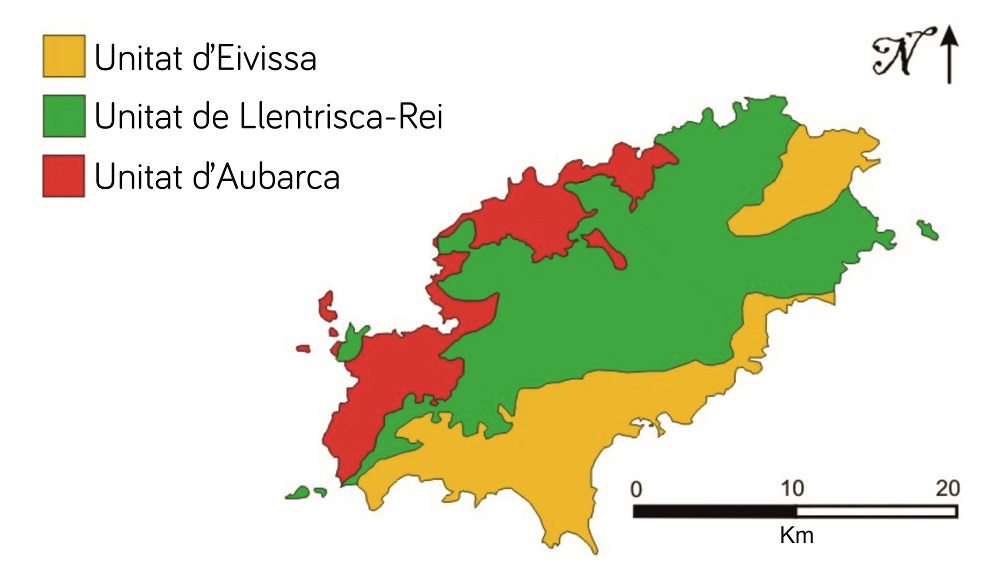
Cartographic map representing the three Structural Units which compose Eivissa.
This fault
<div class="ql-editor"><p class="ql-align-justify">Inverse fault in which the stratification plane.</p><p><br></p></div>">dip of the fault plane is at a low angle (generally less than 45<sup> o</sup>). It tends to refer to large-scale (regional) structures.</p><p><br></p></div>">thrust fault corresponds to the limit between two of the three Structural Units which compose the island of Eivissa: the Aubarca Unit (to which the marls belong) and the Llentrisca-Rei Unit (to which the limestones and calcarenites belong).The limestones and calcarenites, of a blue-grey colour, are stratified into banks of metric order, giving rise to cliffs and strongly inclined strata.
The sedimentary setting of these materials corresponds to a shallow platform with clear and well-oxygenated waters of normal salinity within the photic zone, where there was a great production and sedimentation of carbonates.
This sedimentation took place during a rifting stage which originated large spaces of accommodation due to synsedimentary faults, which helped this unit to acquire significant thicknesses (up to 150 m).
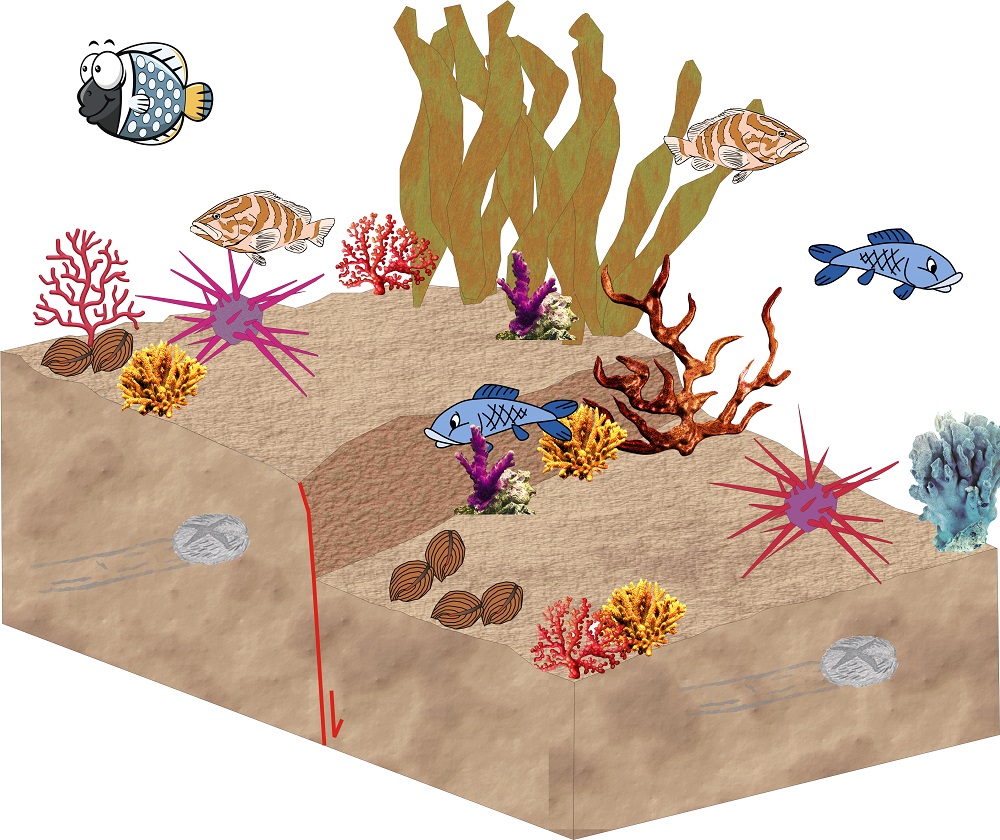
Paleoambiental reconstruction of the Upper Jurassic – Lower Cretaceous.
The marls, which form gentle morphologies, are of a yellowish-white colour and have a leafy appearance. Intercalations of calcarenites or conglomerates can be found.
They were deposited in a shallow marine environment close to the shoreline, possibly in a context of a deltaic front or prodelta.
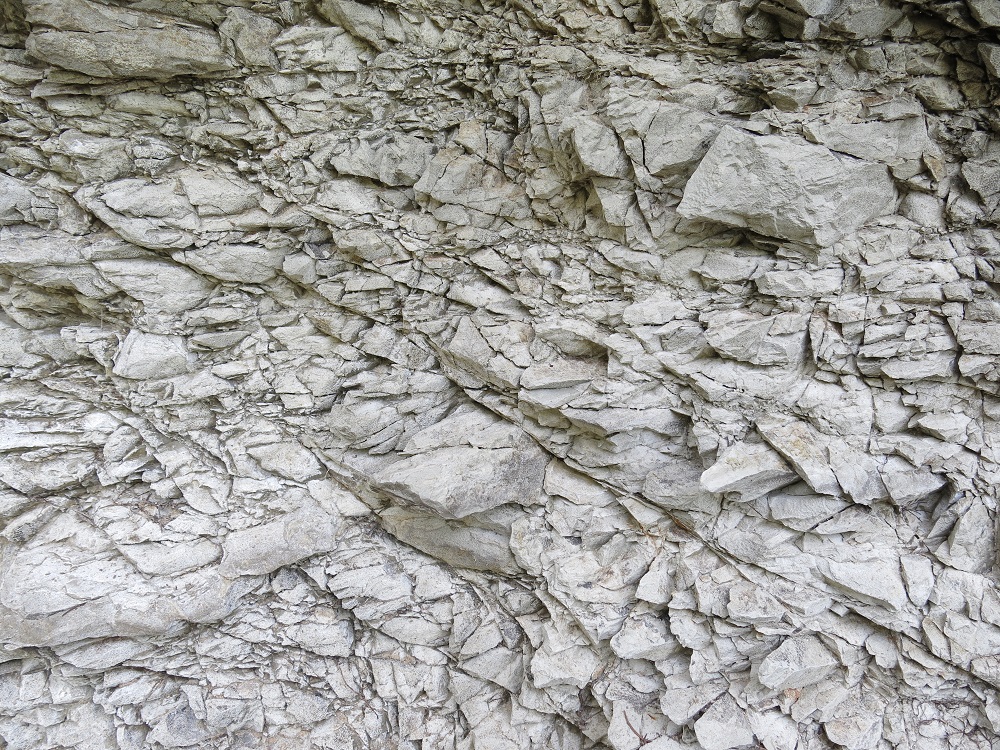
Leafy appearance of the marls
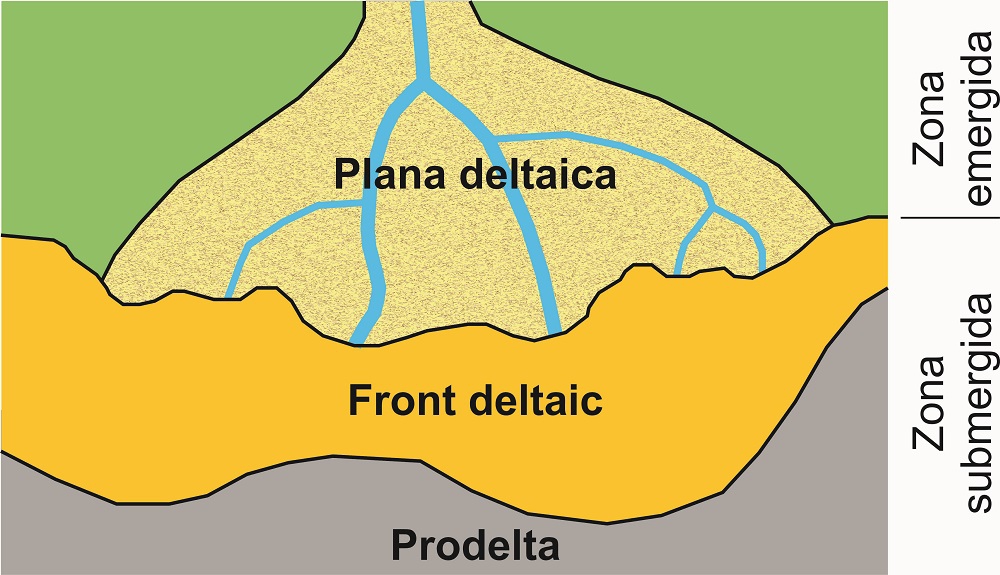
Plan-view representation of the different parts of a delta.
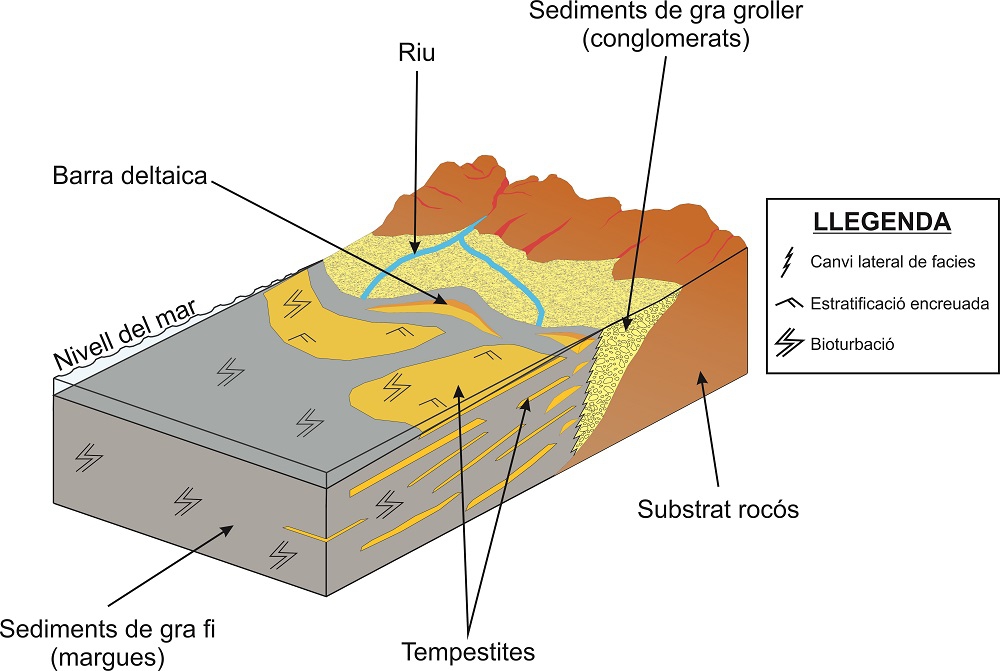
Representative diagram of a delta and its parts.
