The port of Maó has two geologically different shores, to the north (left) are dark sandstones and lloselles that were sedimented over 300 million years ago and that make up a relief of small hills. These rocks contrast with the horizontally-positioned marès, which was sedimented between 10 and 5 million years ago in in a clear, warm and shallow sea on the southern shore and the La Mola peninsula. Both types of rock make contact beneath the water, which is a key factor that led to the formation of the port.
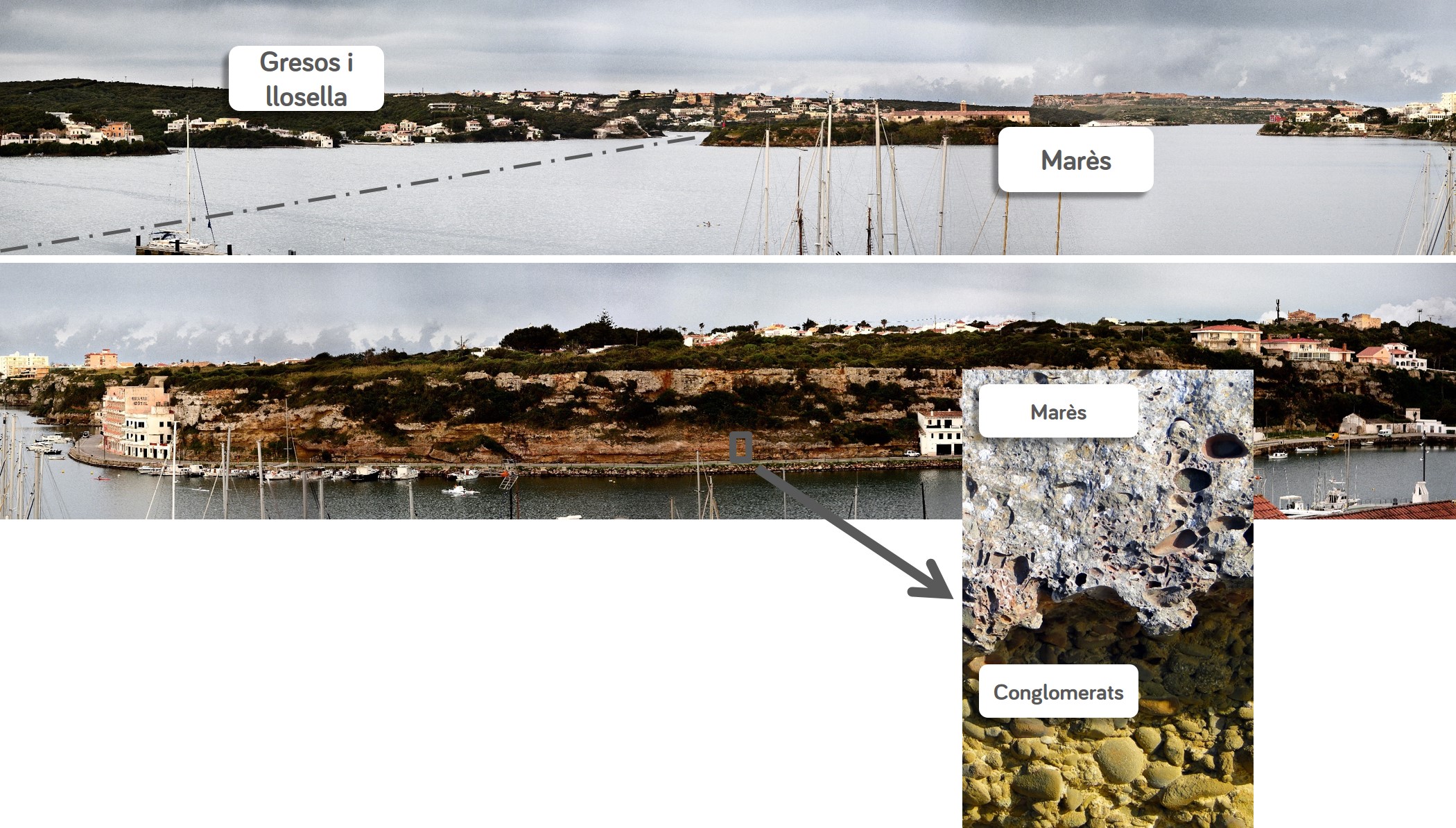
The port of Maó has two geologically different shores, to the north (left) are dark sandstones and lloselles that were sedimented in the great sea depths. By contrast, to the south (right) and on the La Mola peninsula, the light marès and conglomerates offer a tabular layout, which aided the establishment and development of the city.
As the figure following the text shows, the origins of the port lie in an ancient stream that opened up the way for contact between both types of rocks (1). A severe drop in sea levels caused the slope to rise and gave the stream greater erosive power. The southern side of the stream experienced slippages of large blocks of marès which may have led to the creation of coves such as Cala Figuera (2). The valley grew deeper and wider and different rocks led to the formation of abrupt cliffs on the southern side and a softer relief to the north, with small streams flowing between the small hills (3). A rise in sea level stopped the destructive and erosive power of the stream, flooded its valley and consequently created the port of Maó. Only a few small hills that were able to withstand the erosion survived the "flooding": these are the islands in the port (4).
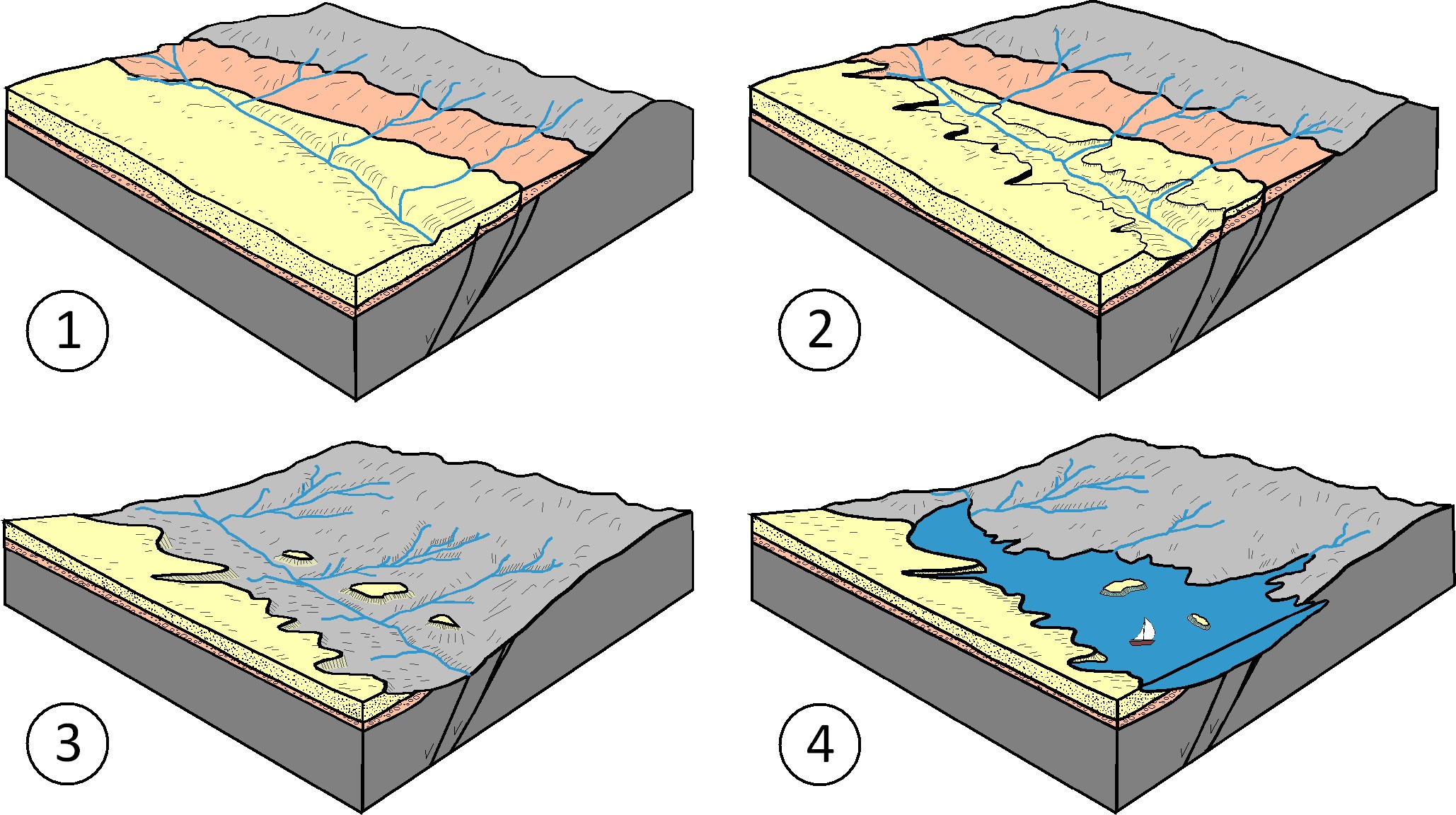
The morphology of the port can be linked to a fluvial valley that was flooded by a rise in sea level.
The cliffs on the southern shore of the port are also made up of conglomerates, rocks formed of rounded cobbles. These cobbles break off easily, which leads to the rock on top, the marès, losing its support and consequently caving in. Deterioration of the cliff is part of its life cycle, but it also poses a risk as can be seen from the constant cliff falls recorded throughout recent history.
