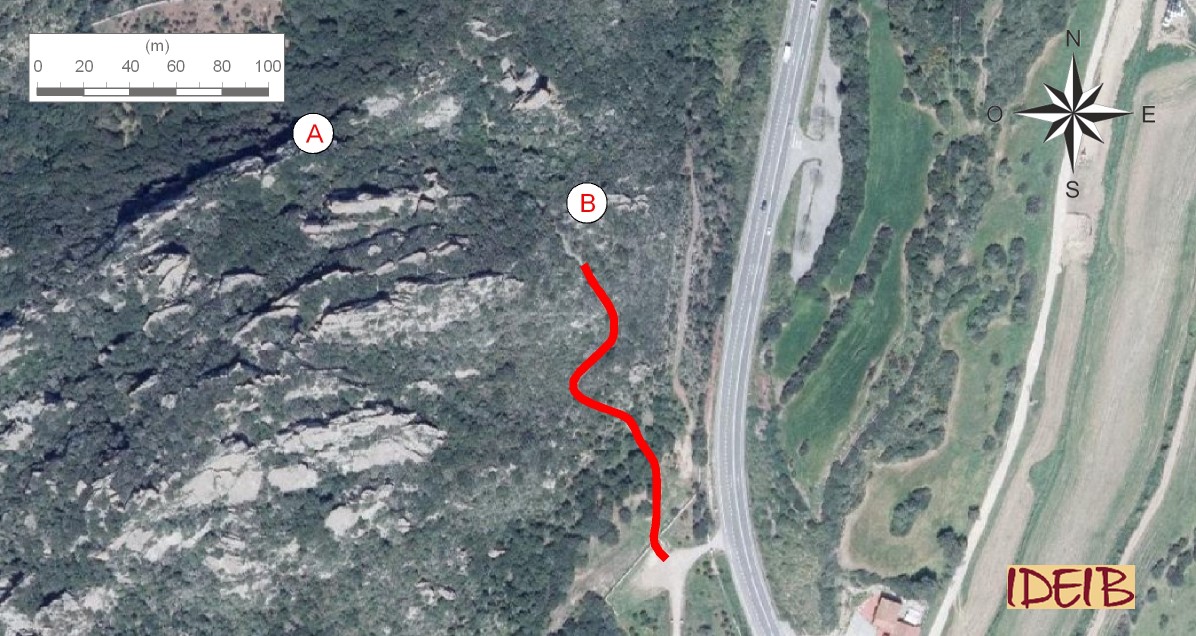
Access route to the stopping point.
The stopping point is at the S’Arangí public farmhouse at the foot of La Penya de s’Indi. The most spectacular outcrops in the Red Menorca are found in the hinterland of Menorca, in areas that are difficult to access and usually on private property. This is why so little is known about the outcrops of the Red Menorca, with some exceptions found in coastal areas with large volumes, such as the Pilar and Pregonda coves and the popular La Penya de s'Indi. This is a monolith found next to the main road (Me-1) connecting the two main towns on the island and which is characterised by its peculiar appearance that recalls the profile of an aquiline nose and a huge feather headdress of a great Apache chief, which means it represents the most popular element of Menorca’s geological heritage. As it is a public farmhouse acquired by the Government of the Balearic Islands in 2012, completely refurbished for visitors, it is the point on the island where you can most easily see the outcrops with striking erosive shapes of the Red Menorca.
The rocks of the Red Menorca are in the Tramuntana region, interleaved between those of the Grey Menorca and the Dark Menorca and occupying 10% of the island’s land. They are formed primarily of sandstones and clays sedimented between 260 and 240 million years ago. They stand out in the landscape, due both to their colour and to their relief. If you go straight to the crag on the trail, you will be surprised on arriving at the forms of erosion in honeycombs or tafone, some of which are surprisingly large and are the result of aeolian erosion of the sandstones.
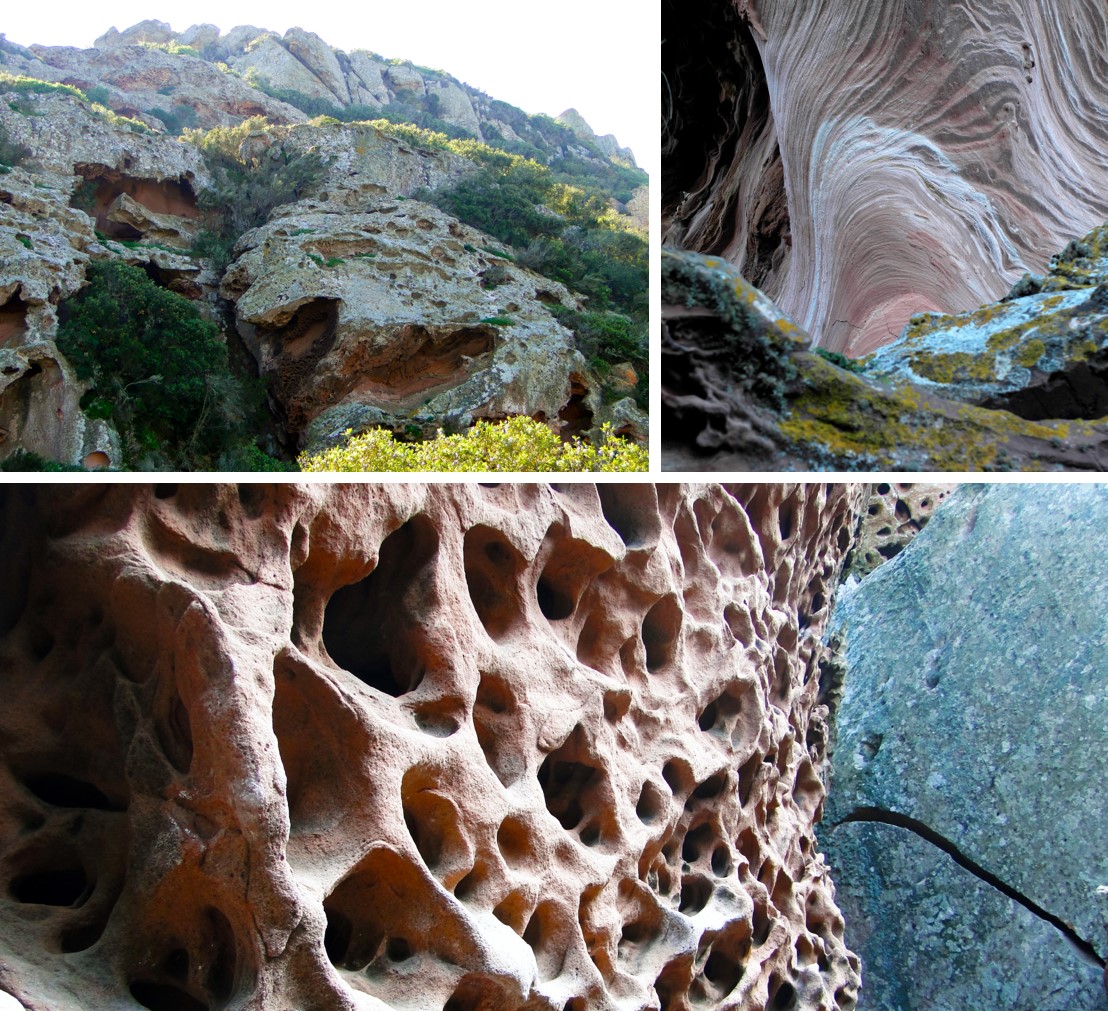
General views and close-ups of the sandstones around the S’Arangí farmhouse (point A) and large honeycomb erosion just behind the La Penya de s’Indi monolith (point B).
The most important wind on the island, not only because of its frequency and speed, but also for its environmental, economic and social effects, is the Tramuntana, which blows for about three-quarters of the year with sustained speeds of 90 km an hour and gusts of up to 120 km an hour, resulting in aeolian salinization due to the large amounts of sea salt carried by the air that fall as the wind blows across the entire island. This is an effect that has a significant impact on the vegetation, causing the movement of some species towards the south and also on the sandstones, favouring the appearance of these beautiful shapes, on rocks that had also been previously weakened by tectonics, organic activity, changes in temperature and different foundation levels.
Unlike most of the rocks found in Menorca, sedimented on the seabed, the rocks in the Red Menorca were formed on terra firma. The sandstones are made up primarily of grains of sand. In Menorca, this sand was transported by large rivers that eroded the mountains thrust up during the Palaeozoic. The accumulation downriver of the grains of sand would end up giving rise to the red sandstones years later. Clays are also formed by grains, but much smaller ones than sand. Rivers also transport these grains, which are extensively accumulated on their banks when they overflow. The presence of iron oxides dissolved in river waters stained these rocks, giving them their characteristic colour.
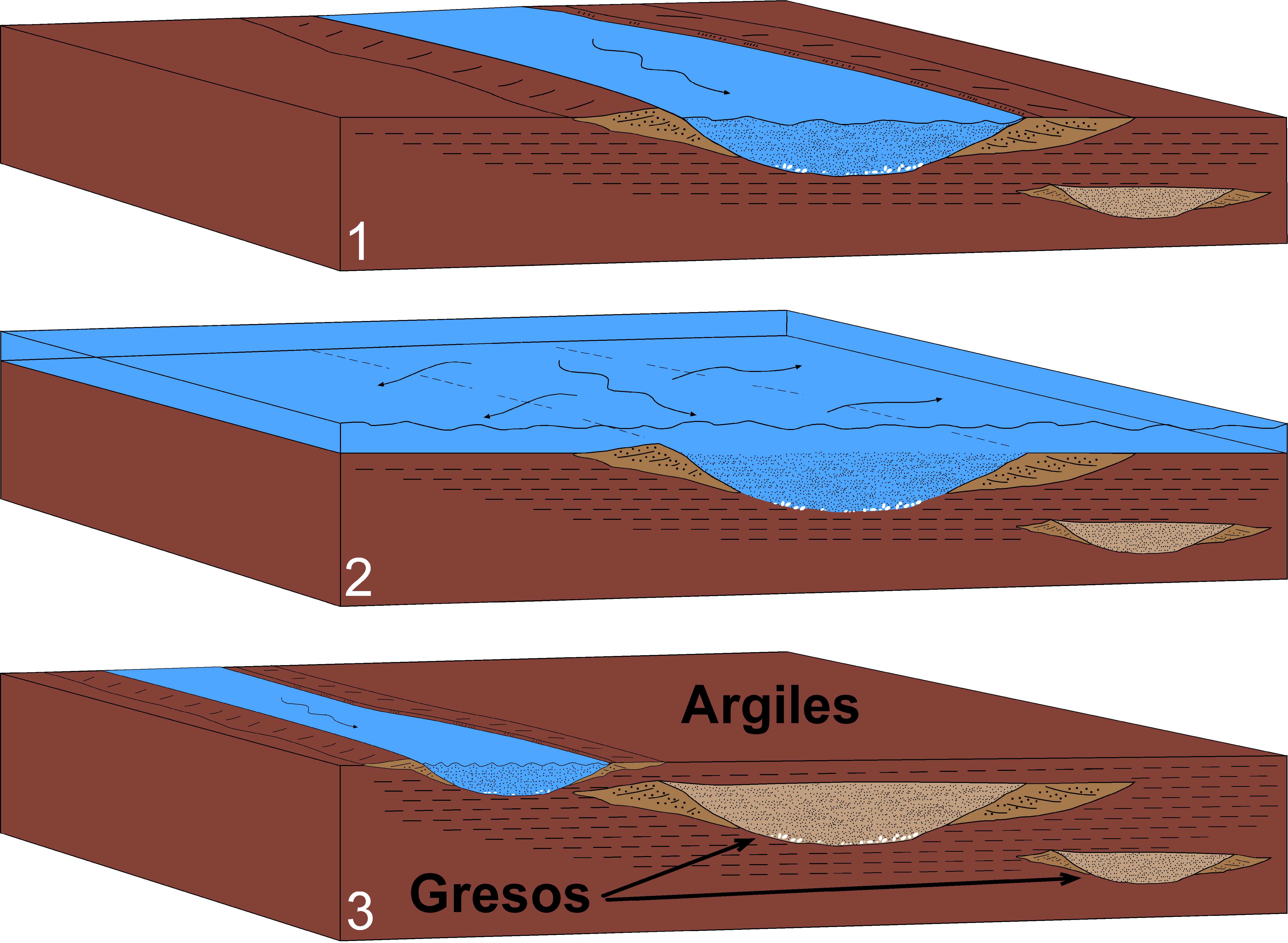
Sandstones are rocks made up primarily of grains of sand that were transported by very powerful rivers that eroded large mountains. The deposition of the grains of sand on the river bed and their subsequent consolidation would end up creating the red sandstones. Much smaller in size, the clays accumulated on the banks of the rivers or on the flood plains when the rivers overflowed.
